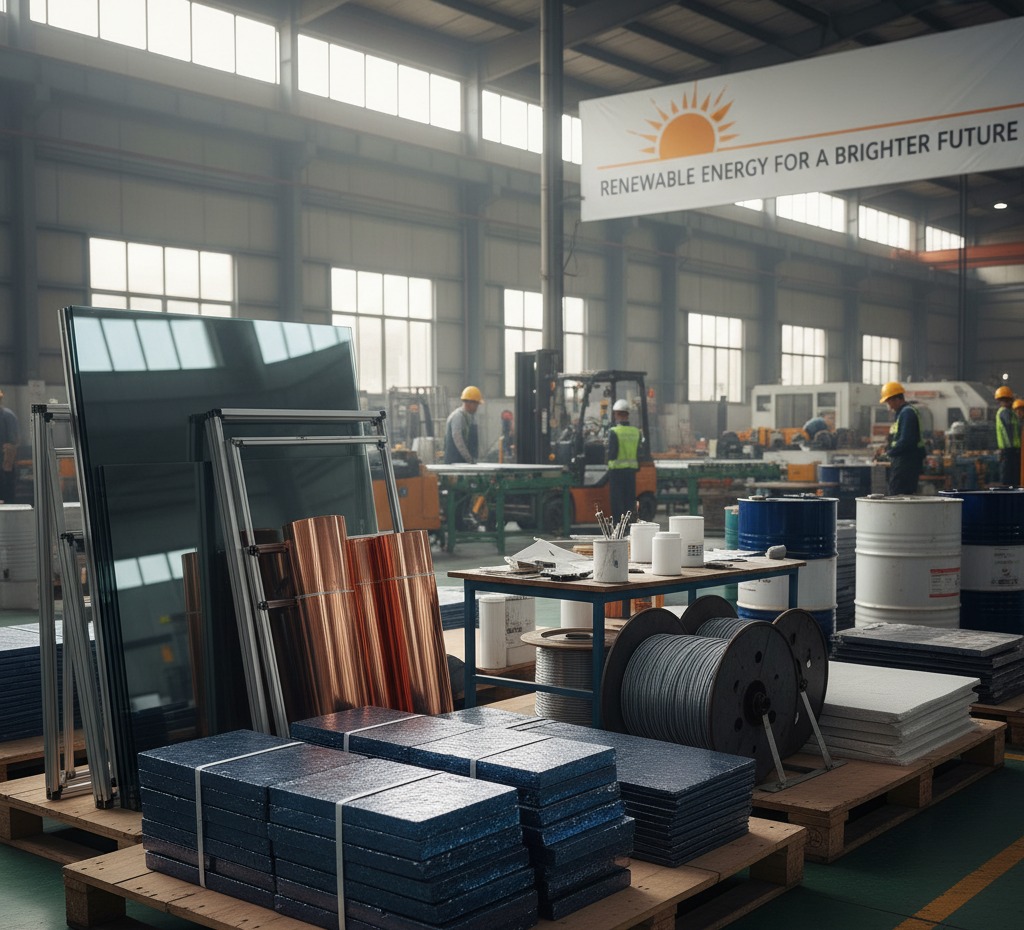
Solar power has been one of the most promising avenues for ensuring a clean and sustainable future. At the core of this transformation are photovoltaic (PV) panels, and what truly defines their performance, durability, and long-term efficiency is the quality of raw materials used in solar manufacturing.
But what really makes their performance, durability, and efficiency possible is not merely cutting-edge technology; it's the raw material quality used in manufacturing them.
Each layer and element is extremely important in determining the efficiency of solar panels in producing energy and enduring environmental issues for decades.
In Emmvee, a top solar manufacturing brand, a commitment to sourcing better raw materials and careful manufacturing processes guarantees that each panel provides maximum energy output, dependability, and durability.
Let's dive deep into materials used in solar panels, exploring their function, characteristics, and contribution to performance.
Silicon: The Core Raw Material in Solar Manufacturing
When talking about the raw materials used in solar panels, that go into solar production, silicon is the best and most crucial element. It is the core of most solar cells, especially in crystalline silicon solar panels that have a stronghold on the global market.
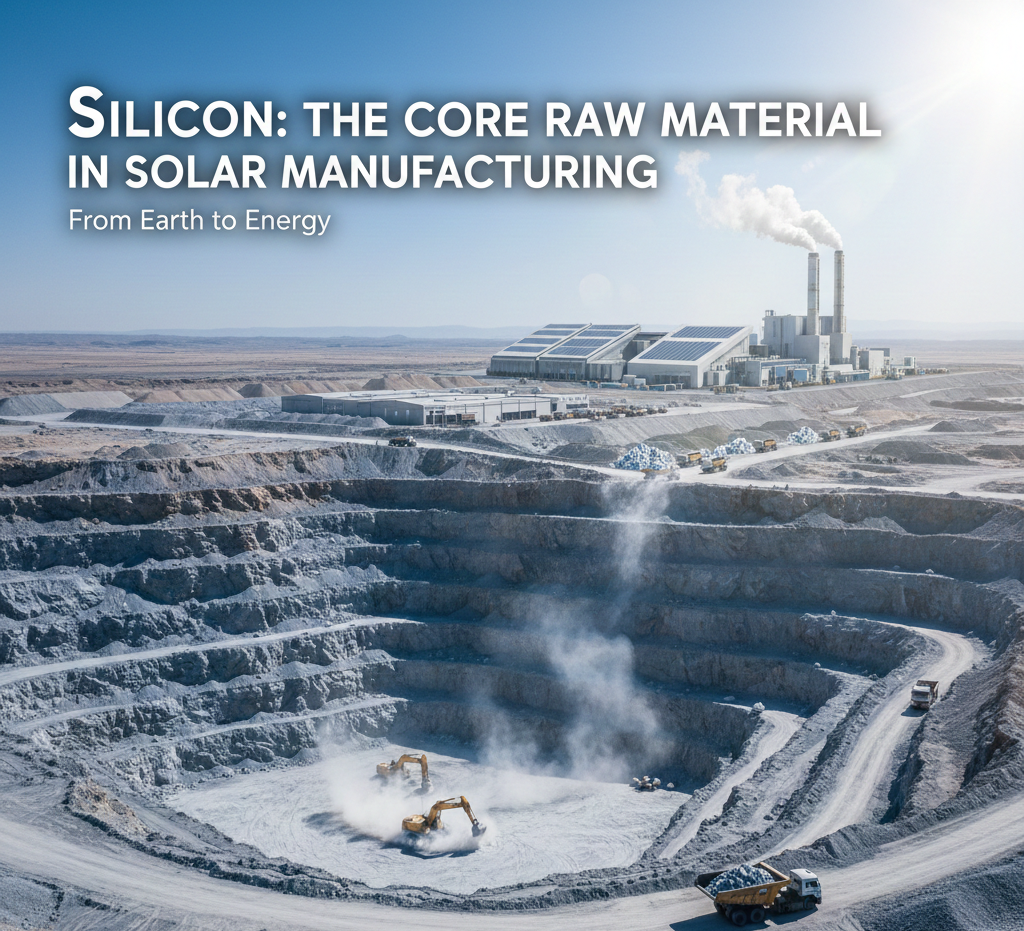
It is purified through a series of refining processes to become semiconductor grade. It is then shaped into wafers, which constitute the solar cells that generate electricity from sunlight via the photovoltaic effect.
When sunlight photons hit the silicon atoms, they knock off electrons, generating an electric current that can be utilized for power generation.
Types of Silicon Used in the Solar Panel Manufacturing Process
- Monocrystalline silicon: Constructed from a single, unbroken crystal structure for high efficiency and a thin profile.
- Polycrystalline silicon: Composed of a variety of crystal pieces, less efficient but cheaper.
Emmvee has top-notch purification and wafer processing to minimize impurities, thus optimizing conversion efficiency and maintaining uniform energy output.
Glass: The Protective Layer in Solar Panel Manufacturing
Glass is one of the most important solar panel raw materials, especially in bifacial panels.
Semi-tempered, low-iron glass is used in the front side of a solar panel, providing high transparency and excellent strength.
This technical glass has several functions:
- Protection: Protects sensitive solar cells from external conditions like rain, dust, and hail.
- Transparency: Enables full sunlight to fall on the cells with minimal reflection loss.
- Durability: Gives structural strength, resisting breakage during stress or thermal expansions.
The glass used by Emmvee is precisely chosen for its optical clarity, resistance to impacts, and anti-reflection features, permitting higher sunlight entry into the panel and enhancing overall performance.
Smooth integration with other materials of this protective glass coating makes the solar panel durable while still ensuring maximum transparency and efficiency.
Encapsulants: Protecting Solar Cells
Encapsulation is the lesser-known, though critical, process in how solar panels are made. The encapsulant holds the solar cells firm between the front glass and back glass/ back sheet at the back.
The most popular encapsulant material used is Ethylene Vinyl Acetate (EVA). It serves as a shock absorber and protective coating to solar cells from the intrusion of moisture and air to the vulnerable semiconductor layers.
EVA also absorbs mechanical shocks and minimizes delamination or corrosion tendencies with time.
Other materials such as POE (Polyolefin Elastomer) are utilized in some high-end modules, with enhanced heat and potential-induced degradation resistance. EPE (Ethylene Propylene Elastomer) is also widely used in our modules, offering strong durability and reliable long-term protection for the cells.
At Emmvee, the selection of encapsulants is dependent on long-term reliability and established performance in varied weather conditions.
Backsheet: The Safety and Insulation Layer
The backsheet is the back surface of the solar panel and acts as a moisture, dust, and UV protection barrier. It is usually constructed from polymeric films like PVF (polyvinyl fluoride) or PET (polyethylene terephthalate), which provides necessary electrical insulation and guarantees the panel's safe operation.
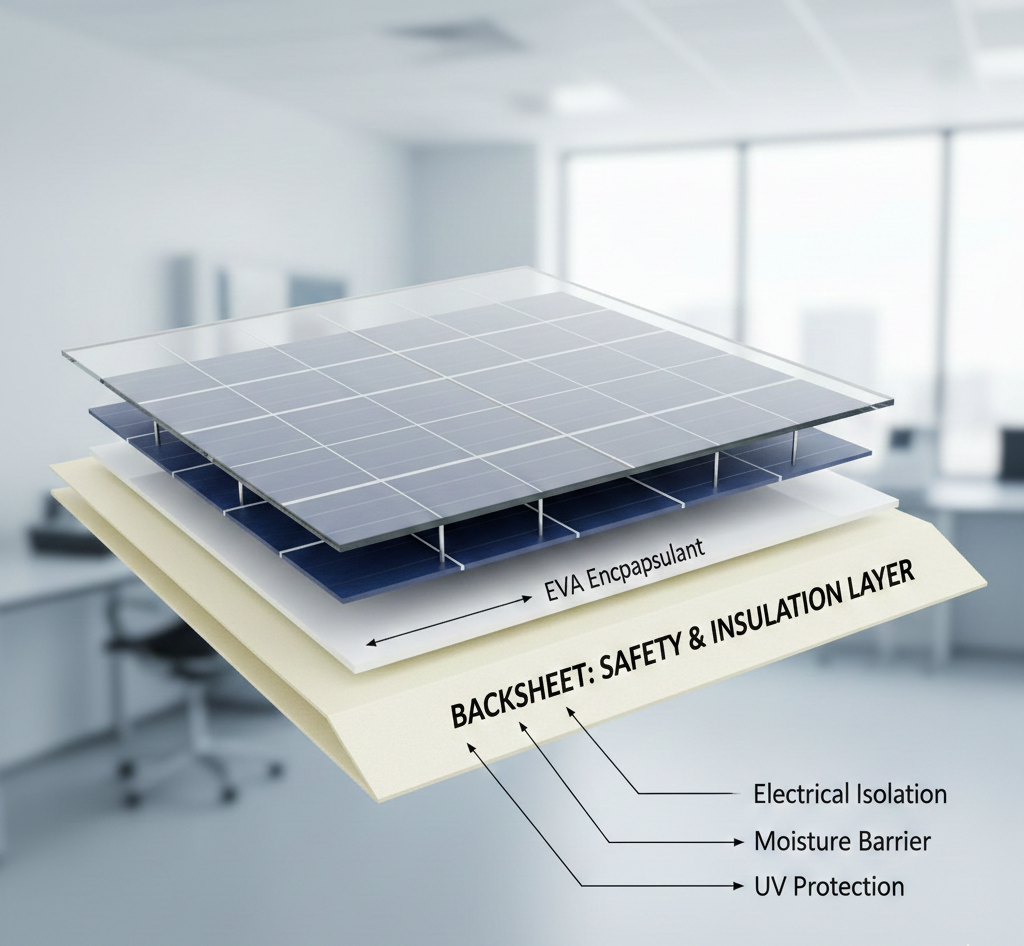
A good backsheet not only increases durability but also overall safety by avoiding short circuits or electrical leakage. It also contributes to temperature regulation by reflecting excess heat away from the panel.
Another instance of direct involvement of raw materials in solar production in the longevity of PV modules is the meticulous choice of backsheet materials.
Frame: Structural Strength in Solar Panel Manufacturing
Every solar panel needs a rigid, corrosion-free frame. Aluminum is most often used to make frames, which offer stiffness, mounting support, and mechanical protection of the glass layers and inner components.
Aluminum frames are chosen for their high strength-to-weight ratio. They also have an anodising layer >15 microns; an aluminum frame with an anodized finish is treated with an electrochemical process that converts the surface into a durable, corrosion-resistant aluminum oxide layer.
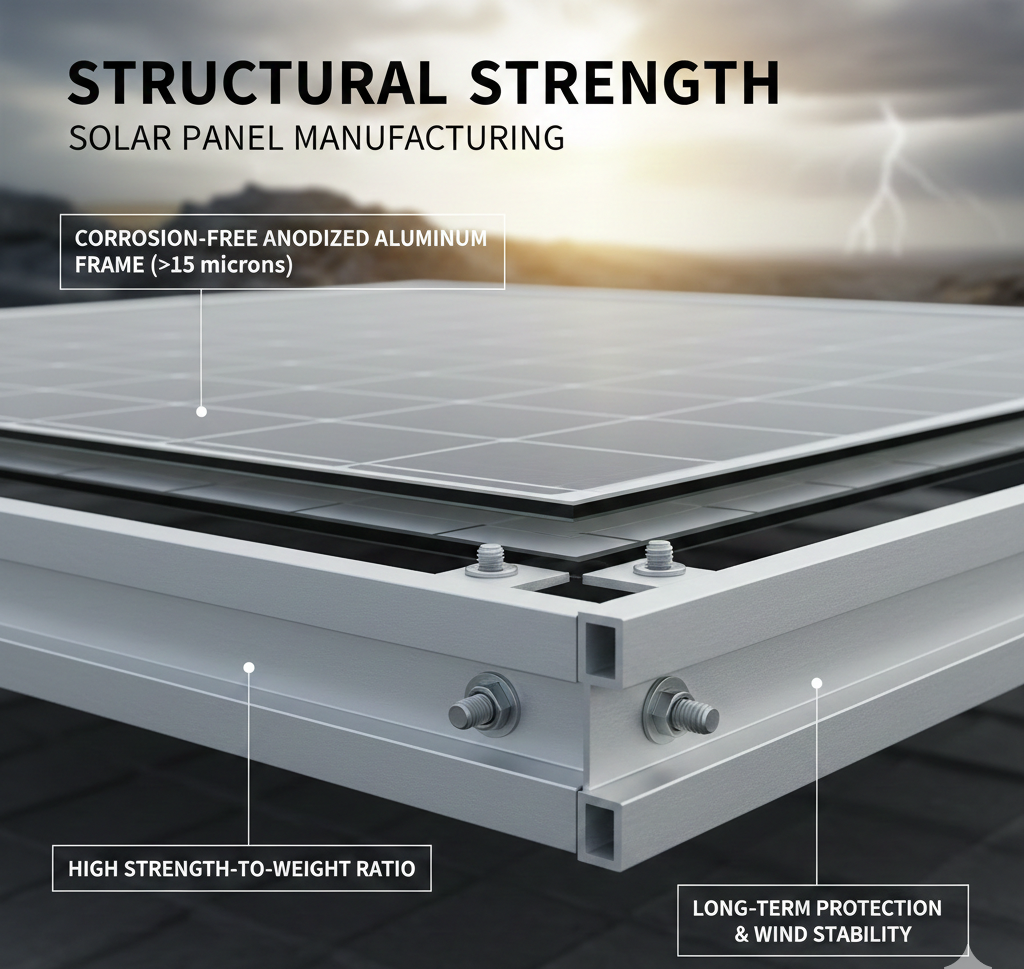
This treatment enhances the frame's strength and scratch resistance and ensures long-term protection even in harsh outdoor environments. The frames are easy to mount on rooftops or floor-based systems, and they remain stable even in the presence of high winds.
At Emmvee, every panel is crafted with precision-engineered frames that fulfill international standards for load and wind resistance. This keeps the panels steady and aligned throughout their lifetime, irrespective of the conditions outside.
Electrical Components: Efficient Power Transmission
While protective and strengthening services are offered by structural materials, electrical components offer power transmission efficiency. Copper and silver are the two most common conductive materials used in the raw material design of solar panels.
Copper wires are utilized since they have good conductivity and flexibility, making them practical between cells and allowing current to move freely.
Silver paste used in solar cells' front contacts helps in collecting and directing electrons with efficiency to enhance electric yield.
Also, junction boxes mounted on the back of panels play a critical safety role. They hold diodes, which prevent backward current flow to protect solar cells during shaded or low-light conditions.
Emmvee panels use high-quality wiring and junction boxes for minimized power loss and low maintenance for long-term system reliability and performance.
To Sum It up
The journey from solar panel raw material to a fully functional PV module is a process based on precision and sustainability. Every step, from silicon wafers to glass layers, encapsulants, backsheets, frames, and wiring, determines the overall performance of the panel.
Using high-quality raw materials in solar manufacturing ensures:
- Higher power output
- Longer lifespan
- Better weather resistance
- Improved safety
- Enhanced long-term reliability
With the use of high-quality raw materials during solar production, Emmvee ensure that their panels deliver higher power output, longer shelf life, and superior resistance to extreme conditions.
Solar technology investment is not merely a question of producing electricity; it is an investment in longevity, sustainability, and perfection.
When every raw material is chosen with intelligence and sophistication, the result is a solar panel that will stand the test of time and be an important contributor to a greener tomorrow.
For high-quality solar panels manufactured with premium raw materials and advanced processes, you can contact Emmvee for reliable solar solutions.