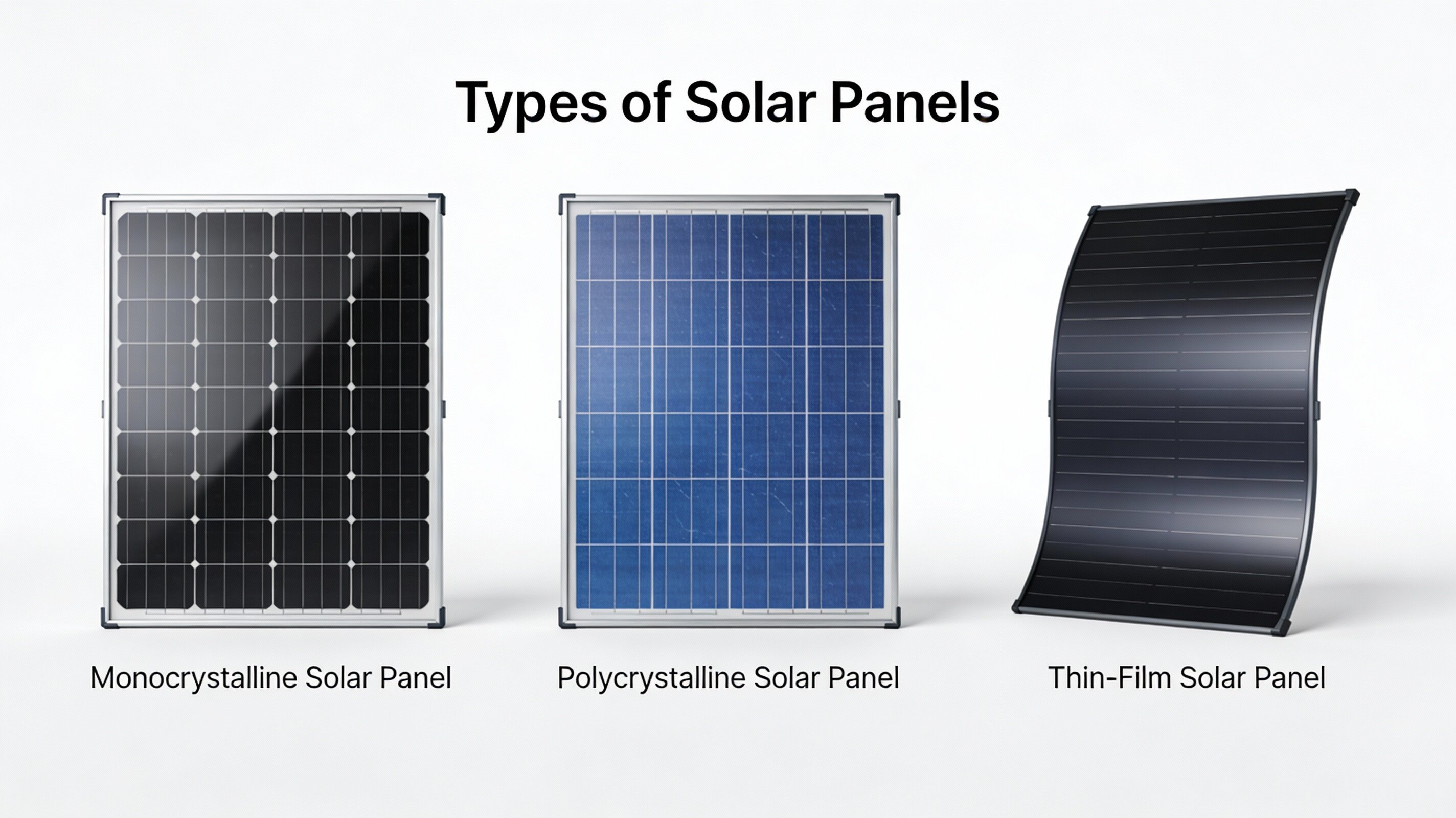
If you have ever thought about going totally solar, then you have probably hit that one big dilemma: “There are so many photovoltaic panels types, which one am I actually supposed to buy?”
Well, you are not alone in this, and this article is all that you need. We all know that the solar world has grown in the last years with new technologies, new brands, and new price ranges, and suddenly the decision does not feel that simple! All photovoltaic panels types might look the same, even if the installer claims theirs is the best, and you are left wondering whether you are making a smart investment or getting lost in the hype.
This guide will help you understand these types and know which type of solar panel is best for you! Especially if you are planning on going with Emmvee, we will answer all the questions you might have. So without further ado, let’s get right into it!
Understanding the Different Types of Solar Panels
First things first, let’s understand how a PV system converts sunlight into usable electricity. It is basically a sunlight-to-electricity machine, and the whole science is like:
The tiny solar cells absorb the sunlight that falls on solar panels. This is when the whole energy from the sun shakes the electrons awake and sets them in motion. And that motion is what becomes direct currency (DC) electricity. The last step is when an inverter steps in and converts DC into AC electricity, which is the kind your home actually uses.
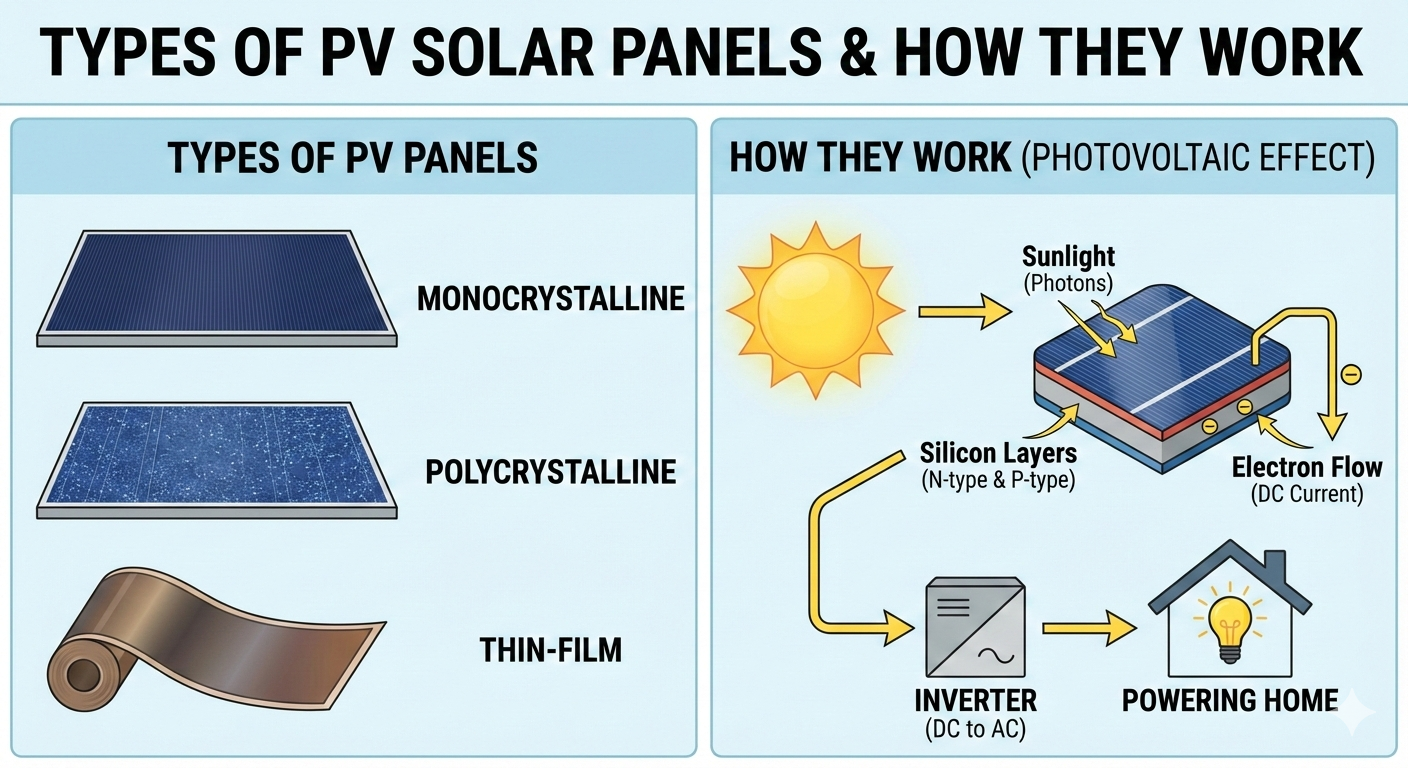
Sun hits the panels → panels turn it into power → inverter makes it usable → your home runs on clean energy.
But you know what most people get surprised by? It's when they ask how many types of solar panels exist because the market looks huge, but in reality, this is what you need to know! Mainly there are three types by cell technology named as:
Monocrystalline
Polycrystalline
Thin-Film
Monocrystalline
These panels are like the premium option in the solar world. They are super sleek, black, efficient, and perfect if you do not have a lot of roof space but still want great power output. Sure, they do cost a little more, but they quietly produce a lot of energy for many, many years.
Polycrystalline
If you are looking for a practical and budget-friendly option, then this is it! Polycrystalline are less efficient (typically 15–18 %) than monocrystalline (20–23 %+), but they get the job done really well for most homes. If you want solar without paying the highest price, these blue-tinted panels give you a smart balance between performance, durability, and, well, affordability.
Thin-film
These panels are lightweight, flexible, and don’t look bulky at all! Although they are not as powerful as traditional silicon panels, they shine on large roofs where space is not a problem. So if you have a warehouse, commercial buildings, and off-grid setups, this will be great!
Now we will talk about the improvements that have been made for more efficiency and keeping in mind the need of companies:
Bifacial solar panels
These are the final bosses! Bifacial panels are like two-sided power machines, where the front absorbs direct sunlight and the back captures reflected light from the ground or roof. Because they generate electricity from both sides, they can produce noticeably more energy. This works wonderfully with open spaces where sunlight bounces around easily.
AC Solar Modules
You can think of these as tiny microinverters built right into each panel. Instead of depending on one big inverter for the whole system, every panel makes its own usable electricity. So even if one panel gets shaded or dusty, guess what? The rest keep working at full power!
PERC
Now we are talking about Passivated Emitter and Rear Cell, commonly known as the PERC technology. This layer basically captures extra sunlight to perform better on hot days and early evenings, or evenings when light is weak. So if you live in a place with extreme summers or cloudy weather, PERC panels can help you to squeeze out the most energy.
Quick Comparison of the Different Types of Solar Panels
Here is a quick comparison table to understand which type of solar panel is best:
Before You Decide, Here Are Some Real-Life Tips
Now that you know which type of solar panel is best, it's time for some tips! If we are honest, then choosing between different types of solar panels is not as complicated as it sounds. When you actually understand the basics, the decisions become much simpler if you think about a few everyday things:
How much of your monthly electricity bill do you want to wipe out?
How much roof space do you really have to play with?
What matters more to you — the lowest upfront cost or the highest long-term savings?
Does your city get insanely hot in summer (because heat does affect panel performance)?
Are you looking at this as a short-term fix, or something that should quietly work for the next 20–25 years?
Once you think about these photovoltaic panels types honestly, the confusion clears up. And suddenly, these different types of solar panels will stop looking like a random list of fancy names and start making sense.
Final Thoughts
So one thing is clear: solar is no longer just a “future thing.” It's actually happening as we write, and you read. Homes and companies are slowly turning to Emmvee for this new solution. The moment you understand the photovoltaic panels types, you realise solar energy doesn’t just give you electricity but gives you control over your bills, savings, and even your impact on the planet.
After this article, you know:
How a PV system quickly turns sunlight into usable power.
How are the different types of solar panels in the market today
What happens inside these types of PV cells that do all the work?
The real pros and cons no one tells you about.
And most importantly, now you know the different types of solar panels, the whole process of buying. It becomes your choice based on your space, your budget, your goals, and your sunlight. So the next time anyone asks, “How many types of solar panels are there?” You’re no longer the confused customer. You’re the person who actually knows and knows how to pick smartly.