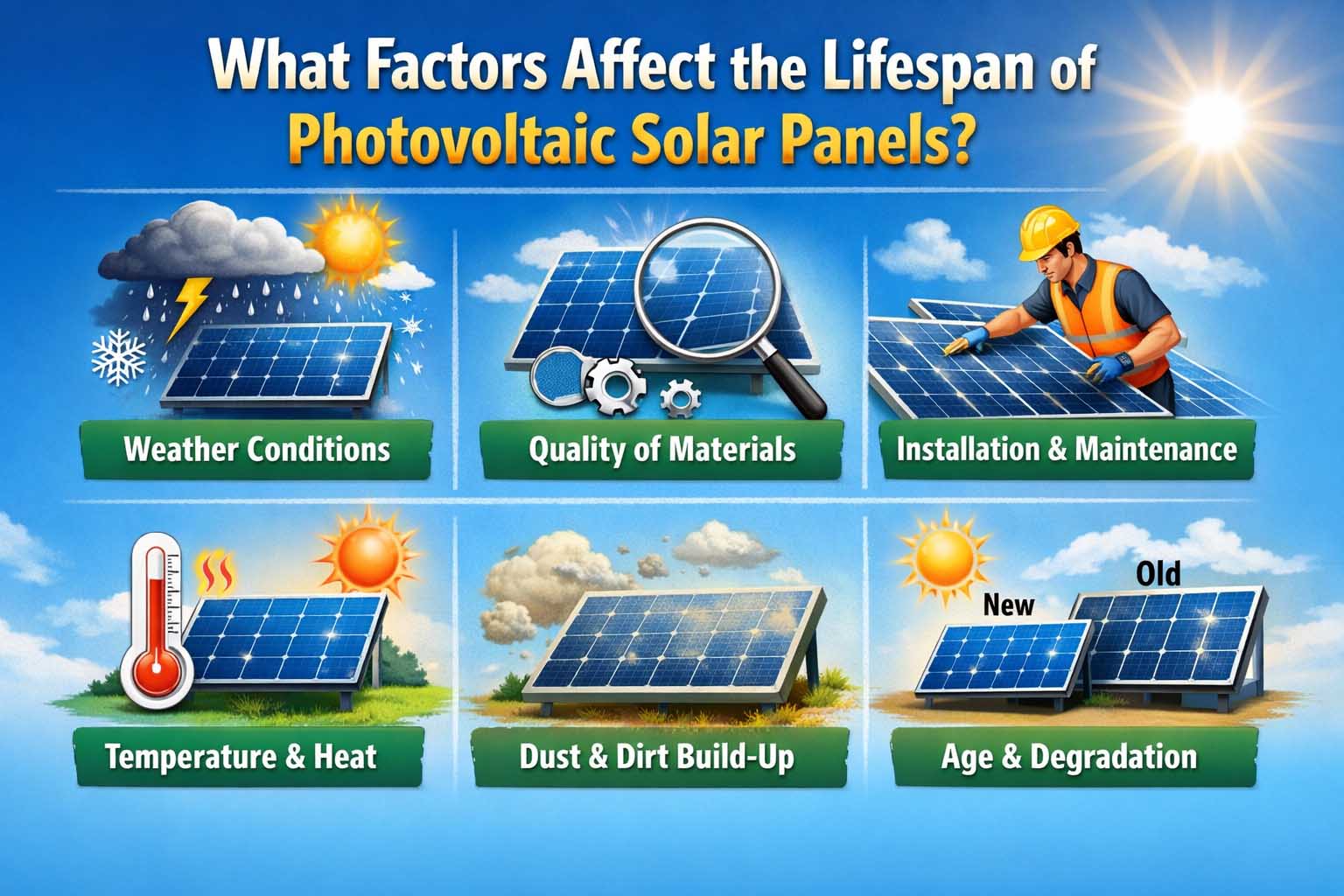
Solar energy has been recognized as one of the rapidly expanding alternative energy resources, now and in the years to come. At the heart of this advancement are PV solar panels, which can convert sunlight into energy required for the functioning of homes, organizations, and industries.
One question many people interested in using solar energy ask is,
How long do solar panels last?
To comprehend the response, it is important to delve deeper into different elements influencing functionality, longevity, and effectiveness.
Let’s understand the factors that are affecting the lifespan of Photovoltaic solar panels through this post.
Understanding Solar Panel Lifespan
The fact is that the lifespan of photovoltaic solar panels commonly refers to a period in which one panel is able to reliably generate electricity at or above a certain percentage of its rated power.
Most modern solar panels can be expected to last upwards of 25-30 years or more, maintaining roughly 80% of their original output by the end of that period. Based on this projection, solar systems are surely a good long-term investment for renewable energy production.
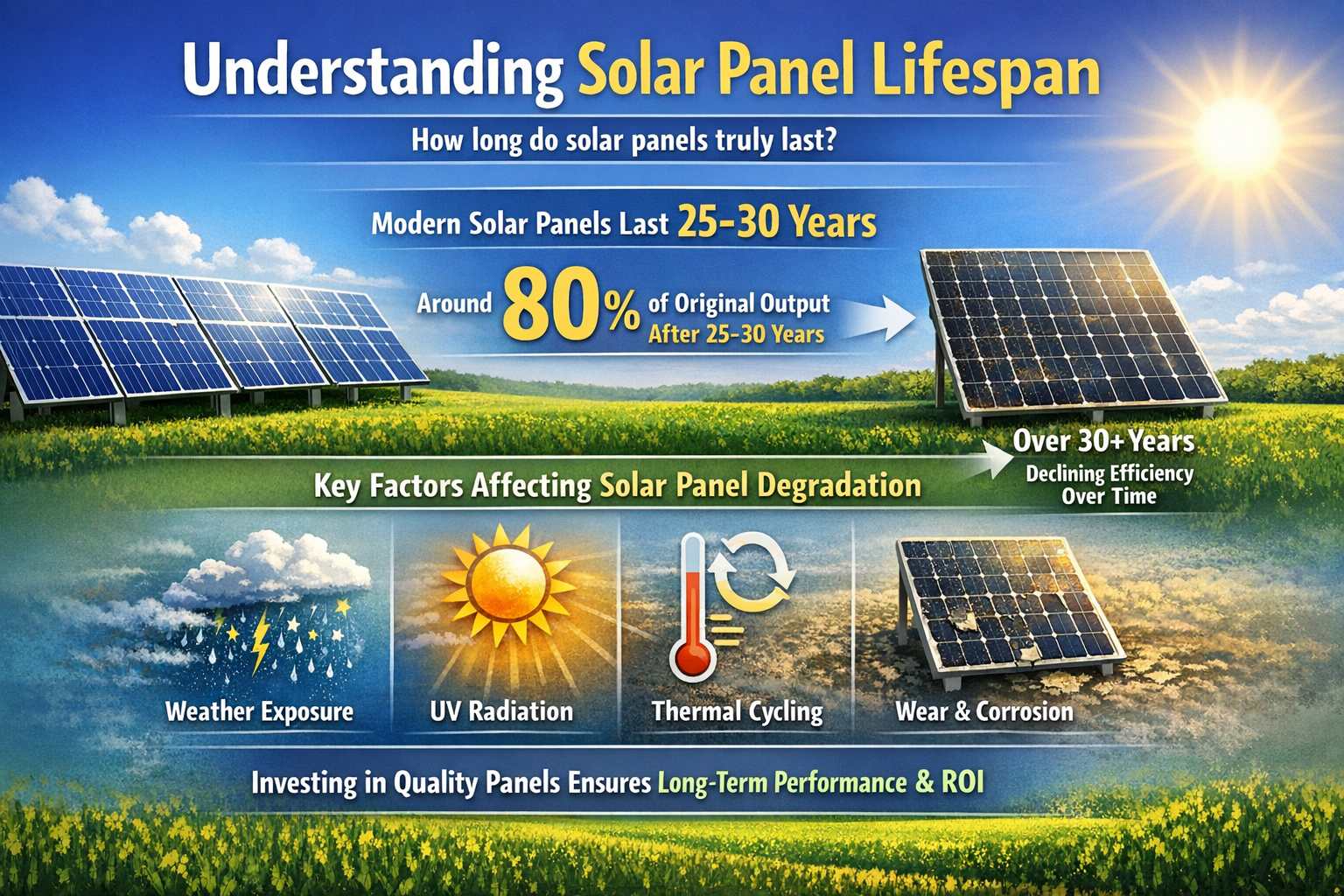 While panels can continue to produce electricity beyond 30 years, their energy output naturally declines due to physical, chemical, and environmental stresses over time.
Understanding the key influencers on this decline is essential in choosing the right product and ensuring the maximization of return on investment.
Photovoltaic Solar Cells: The Core of Solar Panel Lifespan
Every solar panel contains at its core photovoltaic solar cells, made of silicon, capable of converting sunlight into electrical energy.
The usage life of solar cells plays a significant role in determining both the longevity and efficiency of a solar panel installation. This is because quality matters, and panels produced using pure silicon and newer technology will last longer before degrading.
This means that panels that use low-quality materials and technology will deteriorate faster.
Major Factors Affecting Photovoltaic Solar Panel Lifespan
The following are the key factors that determine the lifespan of a solar panel and its efficiency during that span.
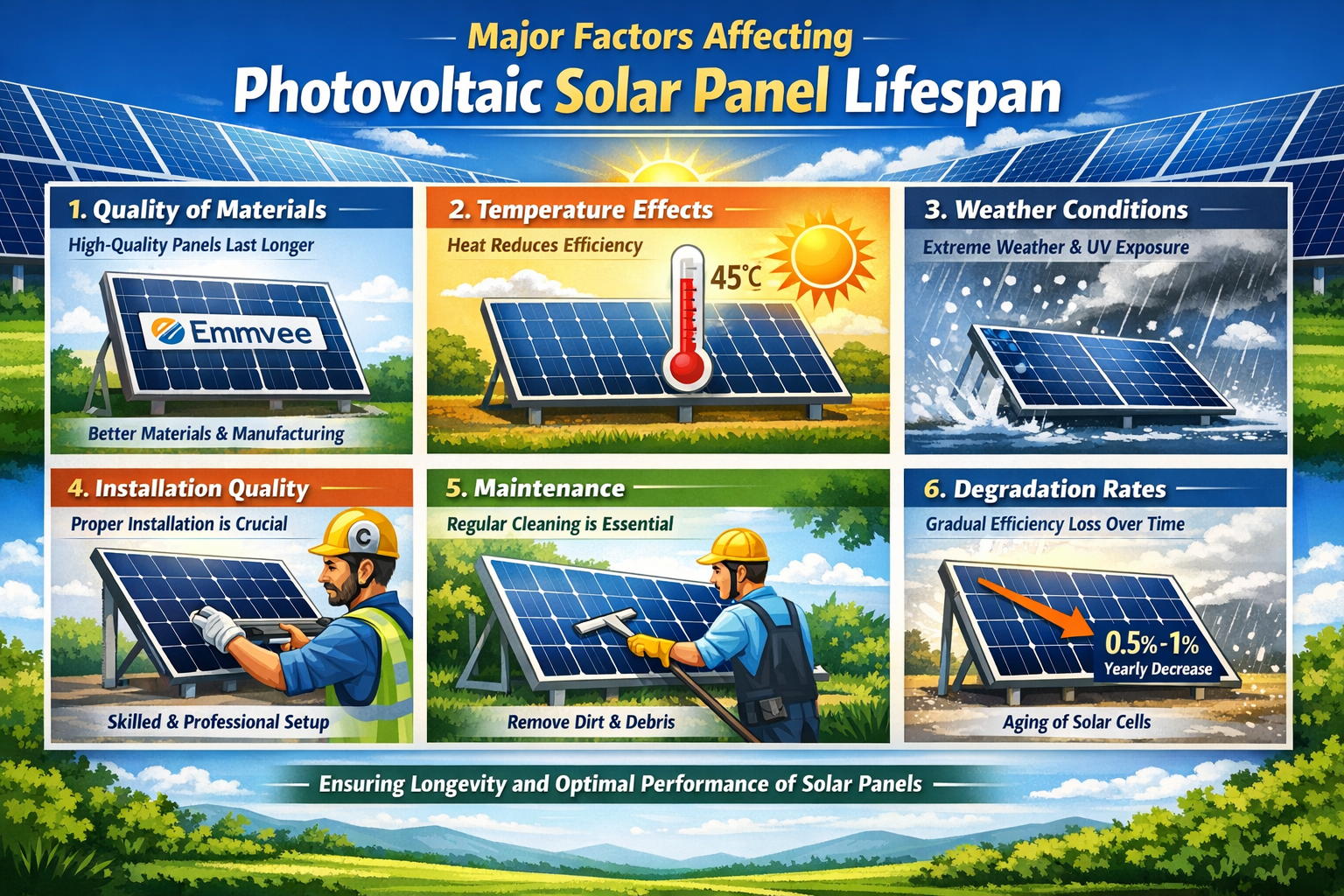
1. Quality of Materials and Manufacturing
Among the most critical factors that influence longevity is the material quality of the solar panels.
Better-quality photovoltaic cells and materials deteriorate less quickly and are more resilient to various environmental factors and usually have better performance characteristics.
Panels made with superior encapsulants, tempered glass, and robust frame structures are more resistant to environmental conditions like moisture, UV, and thermal stresses.
Spending on quality brands such as Emmvee, which happens to be known for its quality solar solutions, will be highly beneficial for improving the longevity of the solar cell and panels. Quality panels also usually come along with longer warranties.
2. Temperature Dependence of Solar Panels
The most important environmental factors of all that influence the performance and lifetime of solar panels are those of temperature.
Solar panels are designed and tested at standard conditions of 25°C. In operation in hot climates, the efficiency of PV cells starts to go down due to increased internal resistance, which accelerates degradation, meaning shorter life spans with lower output.
With each degree rise in temperature above the optimal operating temperature, output efficiency could drop as high as 0.5%.
Hot environments not only reduce efficiency but also accelerate chemical breakdown in encapsulants and solder connections that impact long-term durability.
The best practices for mitigating temperature effects include proper ventilation, elevated mounting structures, and selecting panels with a low temperature coefficient, essentially a specification that details the variation in power output with temperature.
3. Environmental and Weather Conditions
Factors that also affect the longevity and efficiency of solar panels include the environmental conditions under which the panels operate.
Extreme Weather
Harsh weather conditions can damage the panels physically in the form of hail storms, strong winds, snow load damage, and sand abrasion. Such damage may cause the panels to crack or allow water to seep inside of them, shortening the expected lifespan of
UV Radiation and Humidity
Although solar panels can handle sunlight, exposure to UV rays can deteriorate plastics and polymers used in the panel construction. Also, if the region has high moisture levels, especially in tropical regions close to the beach, it can result in corrosion of metallic parts and thus failures in the electric components.
In most cases, panels located within climates with harsher conditions tend to deteriorate at a faster pace than panels within climates with more favorable conditions
4. Installation Quality and System Design
If not installed properly, there could be micro-cracks, poor electrical connections, or leaks. Proper installation, tilting, wiring, and providing sufficient air circulation to the panels are imperative for extending the life of the panels to its maximum.
When it comes to the installation of a solar power system, whether it is Emmvee solar panels or any other brand, the collaboration of skilled personnel guarantees a proper installation of each panel in order to receive maximum sunlight.
5. Maintenance
While solar panels do not have moving parts, they do not work like mechanical elements. Thus, solar panels generally require little or no maintenance. However, solar panel maintenance is important. Indeed, it can go a long way towards extending
The buildup of dust, dirt, bird excrement, or soot may reduce sunlight and lower energy output. There may be a need for regular cleaning and occasional visual checks for any potential problems such as loose connections or damaged panels that can cause a large decrease in output.
It is even more important in urban areas or in environments where dust accumulates quickly.
6. Degradation Rates and Aging Processes
There is a certain natural degradation process in all solar power cells; it is the slow reduction in the capacity for energy production. The degradation rate is estimated to be 0.5% to 1% in a year; this implies that the cells after 25 years are still operating at 80% capacity.
However, this long-term decrease is caused by many variables, which include
Gradual degradation of photovoltaic materials,
Environmental stress,
Light-induced degradation
Potential-induced degradation.
More refined panels and advanced cell and encapsulating materials are better at slowing down degradation and prolonging lifespan.
How Solar Panel Lifespan Affects Your Investment
Understanding the factors that contribute to the efficiency and life span of solar panels informs consumers about the best ways to budget for electricity return.
This means that:
Even more years of clean energy production,
Lower lifetime energy costs,
More financial savings,
A reduced need for early replacement or repairs.
Investing in good-quality panels, such as those from Emmvee, and taking good care of them is likely to result in maximizing both performance and life while minimizing unexpected problems and future upgrade expenditures.
To Wrap Up
The lifespan of photovoltaic solar panels is contingent upon material quality, environmental conditions, installation practices, temperature impacts, and maintenance regime.
Also, while modern solar panels can be designed to last for more than 25 years, long-term efficiency and durability are influenced by various internal and external factors that shape the outcome.
Therefore, it is quite plain that the useful life and amount of energy a solar panel will provide can be greatly extended by first buying a premium-quality panel, second having it installed professionally, and third taking proper care of your system in the future.
Whether this has to do with sustainability, energy independence, or saving money in the long run, understanding these influences empowers you to make smart choices, especially at times when you are installing reliable solar solutions such as Emmvee.