As the demand for energy in India continues to grow, the country faces an increasingly pressing challenge: achieving development goals while simultaneously reducing carbon emissions.
The International Energy Agency states that the energy sector is responsible for almost three-quarters of global greenhouse gas emissions. As a result, reducing emissions in this sector is no longer a choice but a necessity, and solar energy stands out as one of the most effective solutions. Solar power carbon emissions reduction has therefore become a critical focus in the global clean energy transition.
At Emmvee, one of the leading vertically integrated solar PV manufacturers in India, reducing the carbon footprint associated with solar panel manufacturing and implementation is not merely a sustainability agenda. It is integrated into how solar panels are designed, produced, and deployed.
By addressing solar power carbon emissions across the entire value chain, Emmvee enables businesses and power operators to transition quickly and meaningfully from fossil fuels to solar energy.
Understanding Solar Power and Carbon Emissions
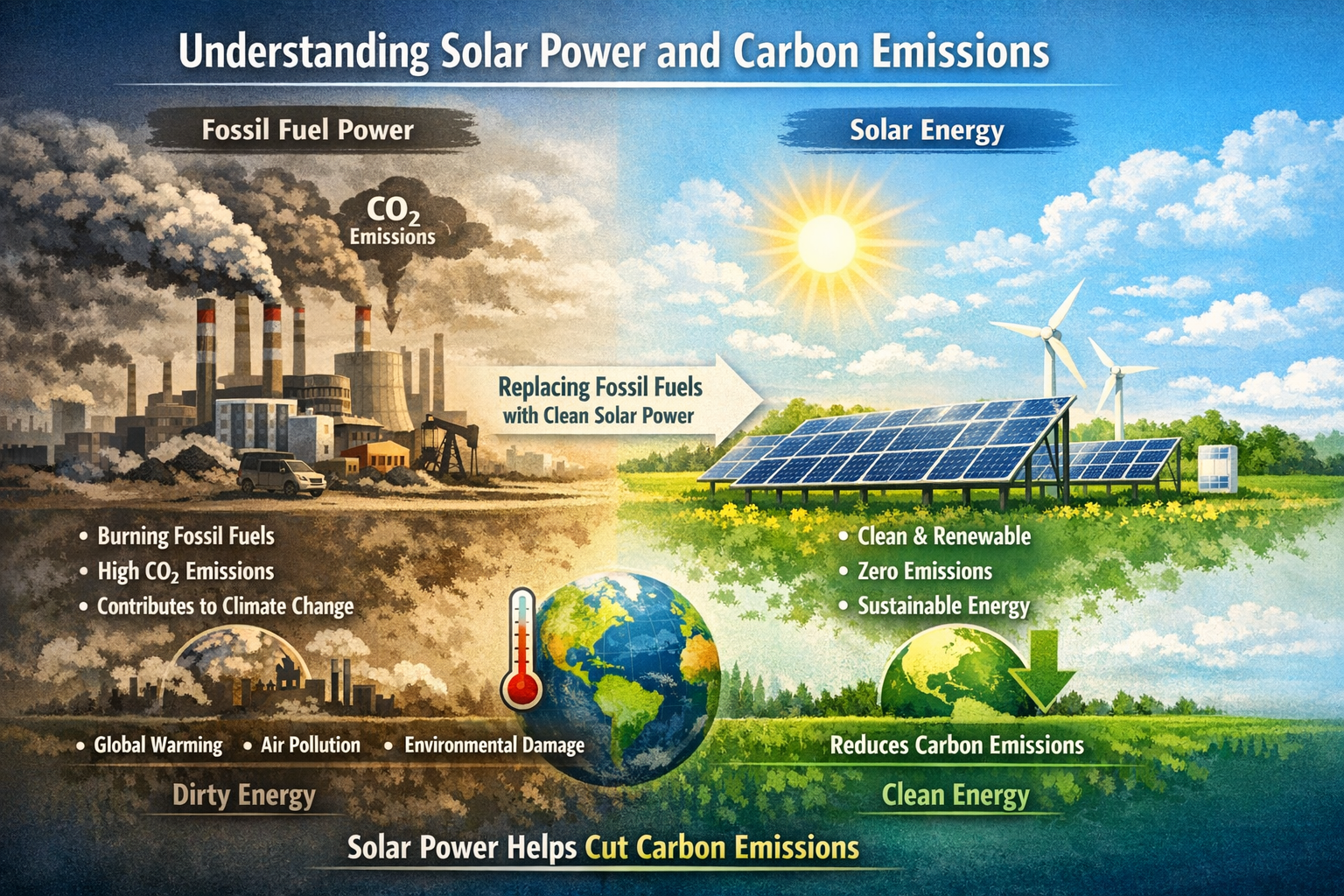 Carbon emissions refer to the release of carbon dioxide and other greenhouse gases into the atmosphere, primarily resulting from activities such as burning fossil fuels for electricity generation, transportation, and industrial processes.
These emissions trap heat and contribute to global warming, climate change, air pollution, and environmental degradation.
Traditional power plants emit large amounts of CO₂ throughout their operation, while solar power systems generate electricity directly from sunlight without combustion.
This is where the key difference lies. Solar energy is one of the cleanest sources of power available today, and by replacing fossil fuel-based electricity, it significantly reduces overall carbon emissions.
How Solar Power Contributes to Reduce Carbon Emissions
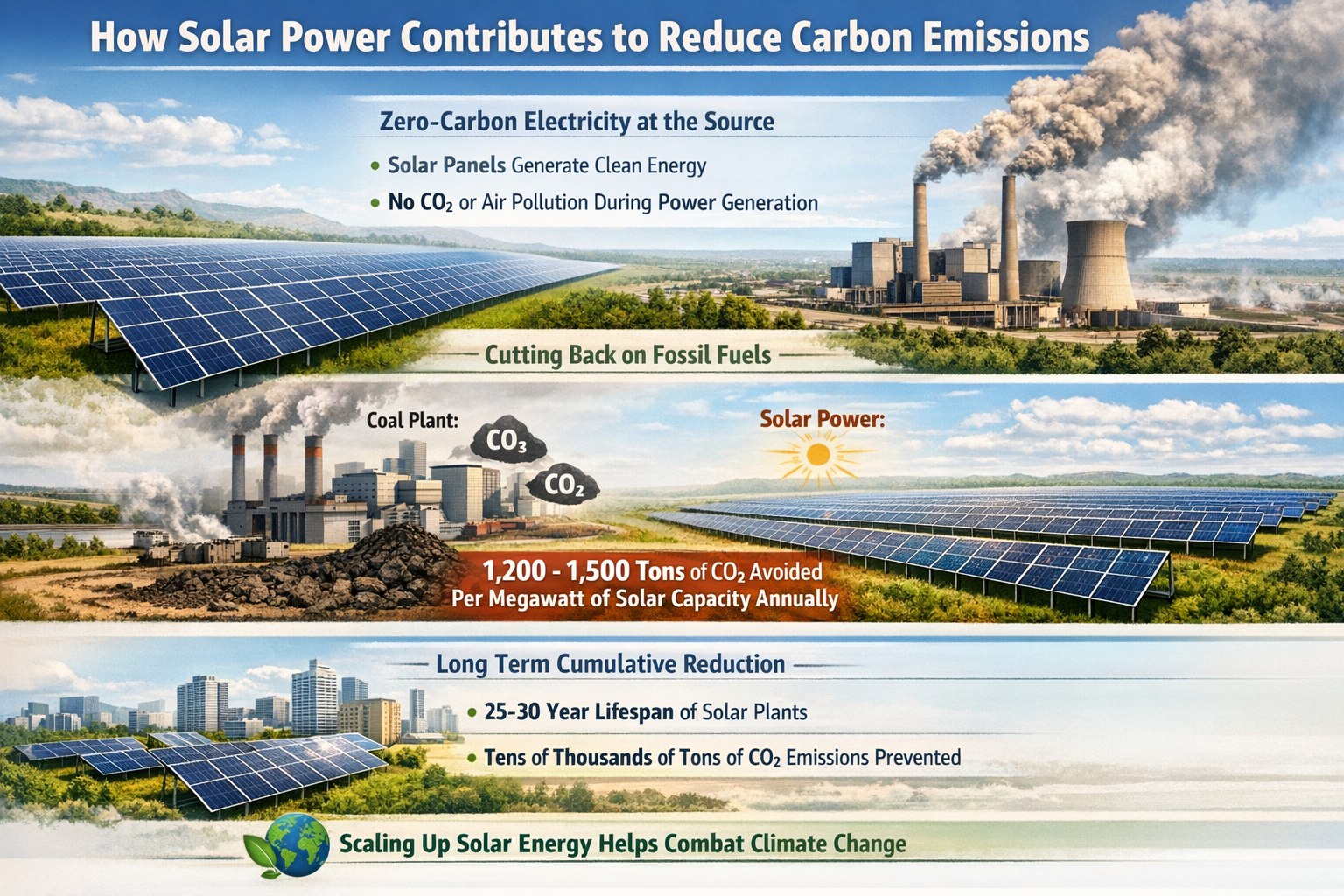
Zero-carbon electricity at the source of production
Once installed, solar PV systems generate electricity without combustion. This means no carbon dioxide or harmful air pollutants are released during power generation. Unlike coal or gas fired plants, solar panels transform sunlight directly into electricity.
Cutting back on fossil fuels in quantity
The impact of solar power is most pronounced in utility-scale solar parks and large rooftop installations, where high-capacity systems replace fossil fuel-based power.
A coal-fired plant emits between 800 and 1,000 grams of CO₂ per kWh of electricity produced, whereas solar PV systems emit none during operation.
For every megawatt of installed solar capacity, approximately 1,200 to 1,500 tons of CO₂ emissions can be mitigated annually, depending on usage intensity. This makes solar energy a powerful strategic tool for reducing dependence on coal and other carbon-intensive fuels.
Long term Cumulative reduction of emissions
With an average lifespan of 25 to 30 years, a solar plant can prevent the release of tens of thousands of tons of carbon dioxide into the atmosphere.
This impact becomes especially significant when solar power is deployed at scale across industrial corridors, rooftops, and other feasible locations.
Carbon Footprint of Solar Panels: A Lifecycle Perspective
Although solar energy is inherently clean, it is important to understand that solar panels have a carbon footprint as well.
The carbon footprint of manufacturing solar panels comes mainly from:
The processing of raw materials like silicon, aluminium, and glass materials.
Manufacturing photovoltaic cells and modules
Transportation and installation
These processes require electricity, which may be sourced from fossil fuels depending on the manufacturing location. As a result, solar panels carry an initial carbon footprint before they begin generating clean energy.
Carbon payback period
The carbon payback period refers to the time required for a solar panel to offset the emissions generated during its manufacture and installation. For modern solar PV systems, this period typically ranges from two to four years.
In contrast, coal- and gas-based power plants emit carbon throughout their entire operating life. After the payback period, solar power plants deliver net climate benefits for more than 20 years.
This short payback period is especially important for policymakers, investors, and corporations seeking long-term emission reductions with minimal carbon risk.
Comparing to traditional sources of energy
Even after accounting for manufacturing emissions, the overall emission rates of solar energy remain significantly lower than those of fossil fuels.
Coal- and gas-based plants continuously emit carbon throughout their lifespan, while solar panels continue producing clean energy for decades after the carbon payback period.
Reducing Carbon Footprint with Solar Energy
Residential Adoption, distributed emission reduction
Residential rooftop solar systems allow households to reduce their dependence on grid electricity, which is largely generated from fossil fuels.
By adopting solar power, households can significantly lower their carbon emissions while also easing peak load demand on utilities.
Commercial and Industrial, decarbonizing business operations
Commercial and industrial customers can realize substantial environmental benefits through solar energy adoption. Large-scale C&I solar projects enable companies to replace carbon-intensive power sources with renewable electricity generated on-site.
This leads to an immediate reduction in Scope 2 emissions and also enhances economic resilience beyond renewable energy benefits.
Utility-scale solar, systemic reduction of emissions
Utility-scale solar farms play a crucial role in reducing national and regional carbon emissions by lowering dependence on coal-based power in the energy mix.
Large solar installations supply green energy at scale, helping offset the need for new coal-fired plants and supporting countries in meeting their climate commitments.
Solar Power Environmental Benefits Other than Carbon Reduction
The environmental advantages of solar power go beyond the reduction of carbon emissions.
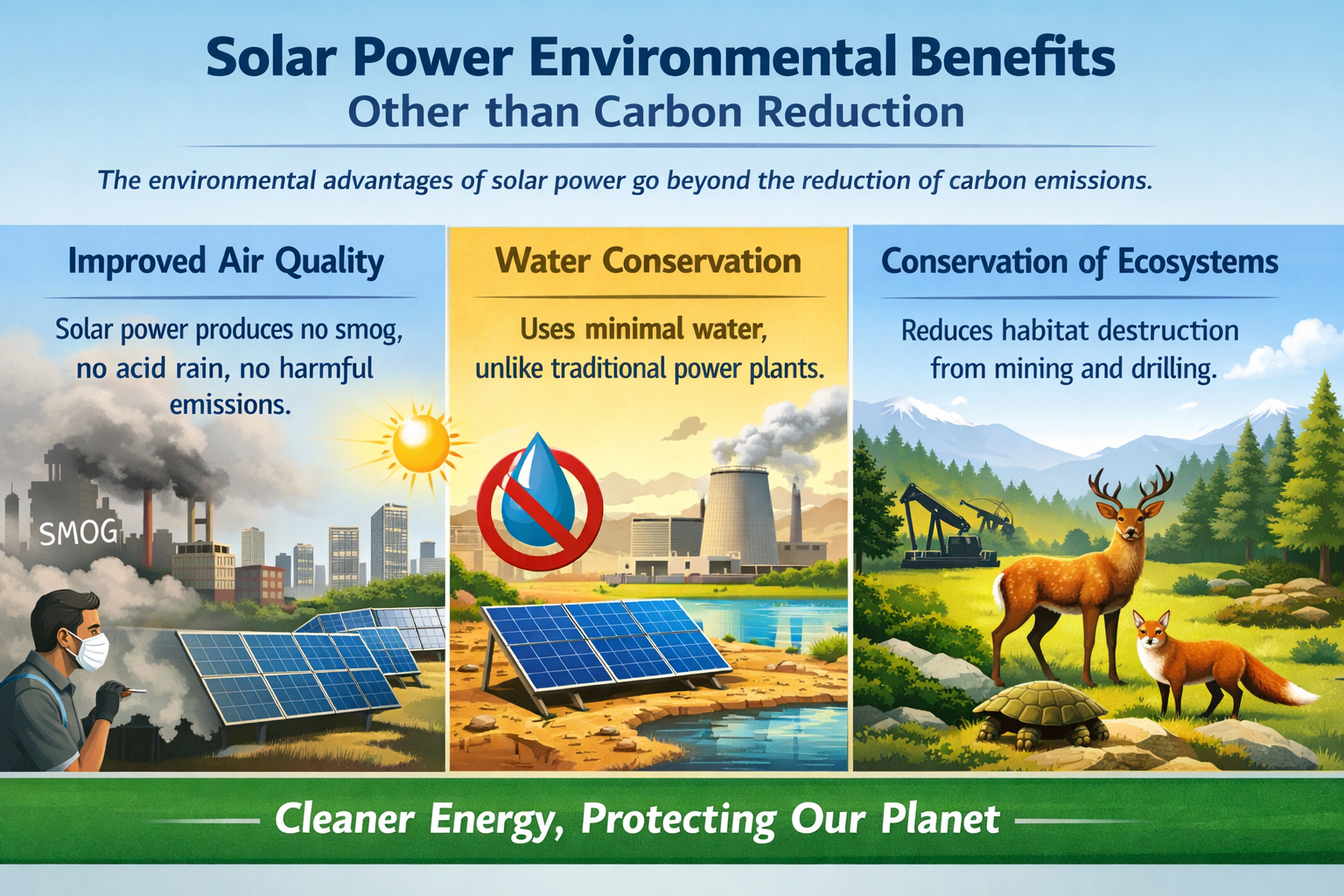
Improved air quality
Unlike fossil fuel power plants, solar power does not emit sulfur dioxide, nitrogen oxides, or particulate matter. These pollutants contribute to smog, acid rain, and serious health issues. Cleaner air results in healthier communities and reduced healthcare costs.
Water conservation
Traditional power plants consume large quantities of water, whereas solar energy requires minimal water for operation. This makes solar power particularly valuable in water-scarce regions.
Conservation of ecosystems
By reducing the need for mining, drilling, and fuel transportation, solar energy helps protect natural habitats and ecosystems that are often damaged by fossil fuel extraction.
The Future of Solar Power and Carbon Reduction
With continuous advancements in solar technology, the carbon footprint associated with solar energy is expected to decline further.
Advanced solar modules and improved recycling systems are being rapidly adopted, positioning solar energy not just as a transitional solution but as a long-term pillar of carbon reduction.
This is where manufacturers play a critical role. Through investments in advanced manufacturing, optimized supply chains, and large-scale deployment, companies like Emmvee PV are driving the expansion of the low-carbon energy sector.
The path to a reduced-carbon future will be determined not only by intent but by measurable outcomes and quality execution, and solar energy is poised to lead the way.
To Wrap Up
Solar energy has been touted as one of the pragmatic solutions towards the growing crises of carbon emissions and environmental degradation.
Although there is a carbon footprint of manufacturing solar panels, long-term benefits from solar power far outweigh the upfront emissions it generates.
Clean electricity generation, improved air quality, water conservation, and alignment with climate goals position solar power as a comprehensive environmental solution.
Through innovation and commitment, Emmvee continues to support the transition toward sustainable energy, enabling individuals and businesses to reduce their carbon footprint and move toward a cleaner, sun-powered future.