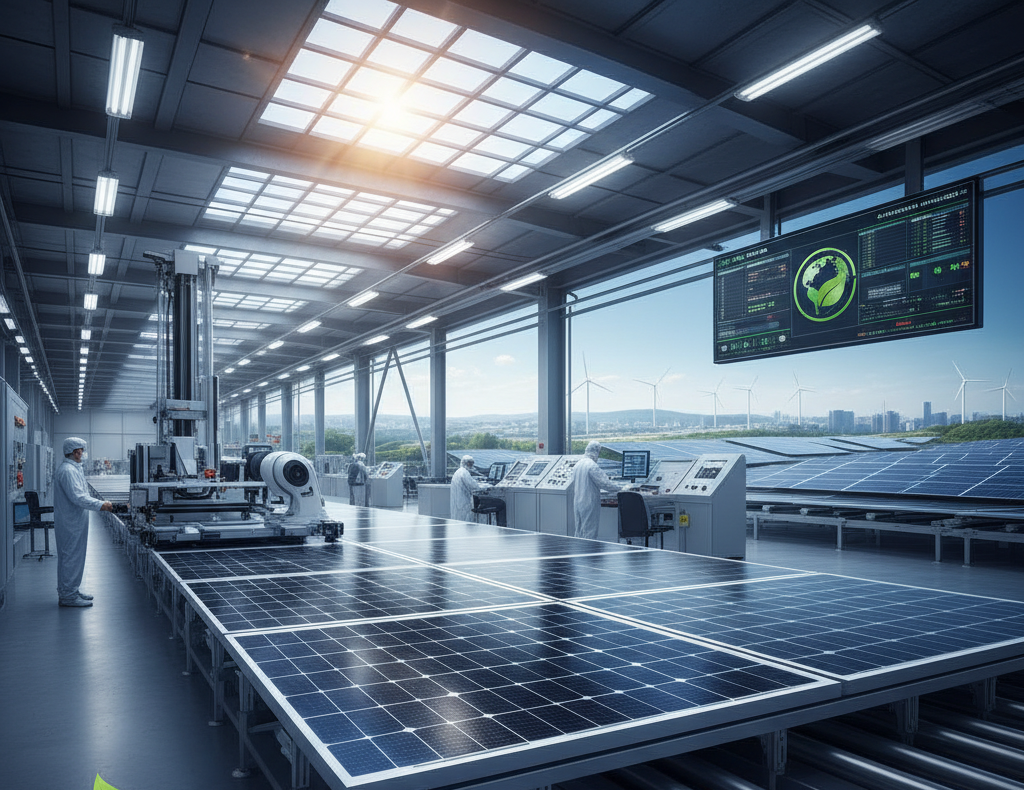
The solar sector is growing at an unprecedented rate, hurtling towards terawatt-per-year installations in the course of this decade. With growth comes a vital responsibility: that the technology itself that will help decarbonize our world is being manufactured in a sustainable manner and to the highest levels of quality.
On the world stage, solar PV manufacturing is not so much about mass production; it is about responsible production. The real climate dividend of solar is reducing embodied emissions, optimizing efficiency, and creating durable products that will last decades.
Companies such as a top solar PV production company, are showing the way in which sustainability and innovation can seamlessly complement each other.
Value Chain Analysis
Spatially, PV cell manufacturing involves divided sequences, where each possesses relative cost, performance, and environmental impact.
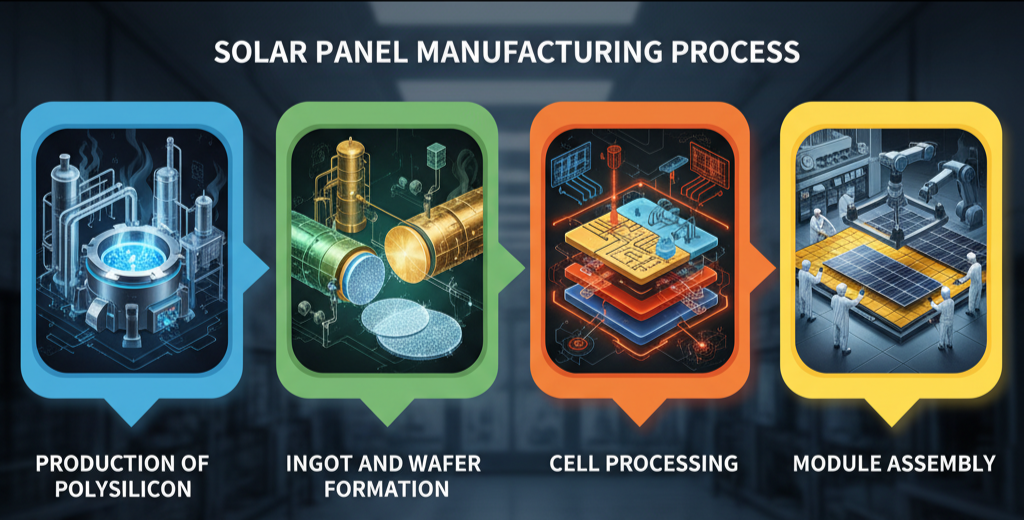
Production of Polysilicon: Module quality is determined by this incredibly costly process.
Ingot and Wafer Formation: Fundamental to Precision and Material Use Efficiency.
Cell Processing: This is where maximum technological efficiency is utilized.
Module Assembly: This step ensures dependability, longevity, and optimized performance out in the field.
Optimizations have been practiced in the entire system, lowering cost and embodied carbon and increasing the lifespan of the product.
Total Carbon and Life Cycle Energy Payback
Beyond its operation, the entire panel’s sustainability hinges on two factors:
Carbon footprint
Modern modules, depending on efficiency, can vary from 20 to 50 gCO₂e/kWh on energy sources used during production.
Energy Payback Time (EPBT)
Utility scale and rooftop installations sit at around 1 and 3 years of EPBT, respectively. After, the panel produces clean energy for around 25 to 30 years.
Renewable energy-powered factories such as Emmvee's reduce embodied emissions radically, and high-performance cell designs minimize modules per megawatt, reducing BOS effects.
Pillars of Manufacturing Excellence

Solar PV manufacturing companies are embracing new-age automation to decrease energy consumption per watt and scrap to enhance the accuracy. This smart process control ensures that variability is minimized and enhances the yield rates and uniformity.
Careful QA and Standards
From incoming material inspections to electroluminescence images of completed modules, quality assurance dictates long-term reliability. Certifications, traceability, and third-party inspection create customer confidence and lengthen the life generation potential of each panel.
At Emmvee you get end-to-end Q&A means that each module is up to global standards for safety and longevity.
Performance Innovation that Minimizes Impact
High-Efficiency Technologies
New cell designs such as TOPCon (Tunnel Oxide Passivated Contact), HJT (Heterojunction Technology), and bifacial modules are allowing record-breaking efficiencies. These technologies mean that fewer panels are needed to produce the same megawatt output, reducing BOS needs and embodied carbon per unit of energy produced.
Materials and Design Optimization
Silver reduction decreases reliance on rare, expensive materials.
Thinner wafers decrease silicon use without impacting performance.
Long-lasting encapsulation materials lengthen panel lifetimes, extending reliable operation well beyond 30 years.
By prioritizing both efficiency and durability, top PV module manufacturers are making each unit supply more clean electricity during its lifetime, maximizing climate gains.
Design for Circularity
As the world deploys billions of modules, end-of-life planning is imperative. Circular design principles are becoming a pillar of sustainability in solar PV manufacturing.
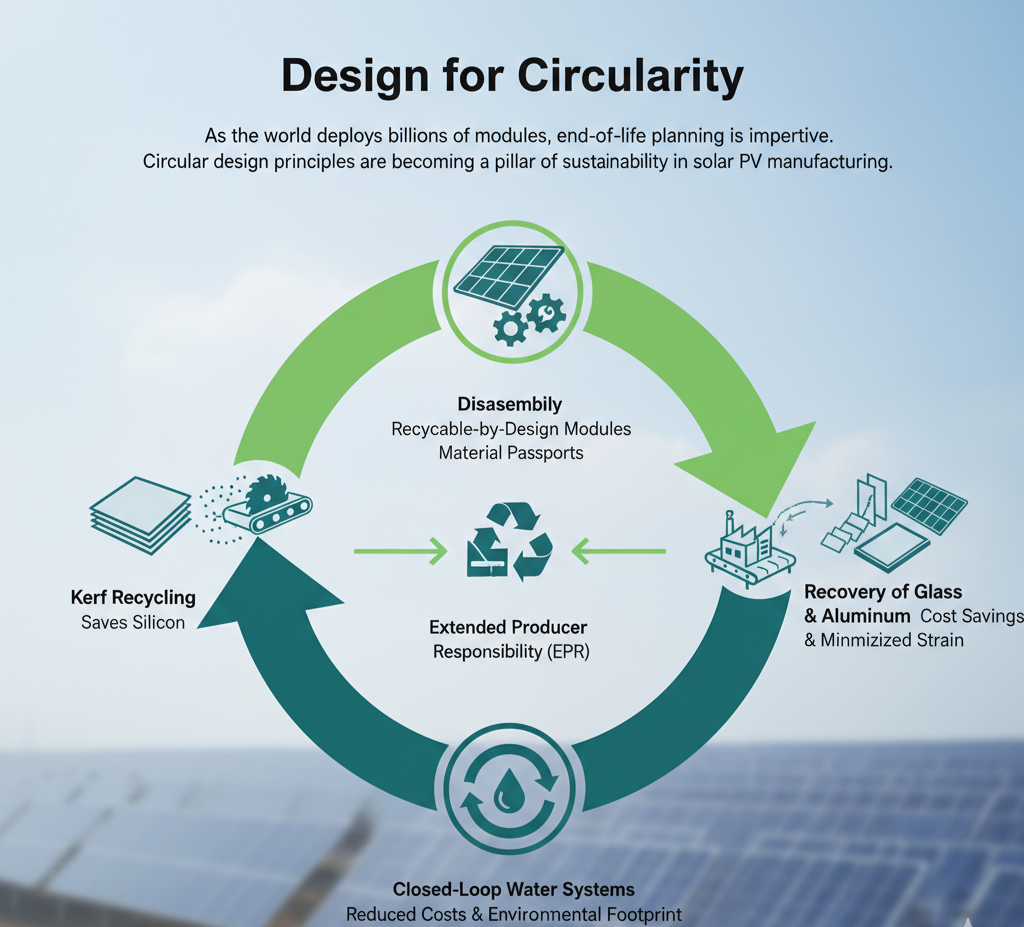
Disassembly is easier with recyclable-by-design modules and material passports.
Extended Producer Responsibility (EPR) holds manufacturers responsible for product recovery and recycling.
Kerf recycling saves silicon lost in wafer cutting.
Recovery of glass and aluminum allows cost savings and a minimized strain on resources.
Closed-loop water systems reduce costs and environmental footprint.
Emmvee is leading such efforts, prepping for waste curves anticipated between 2030 and 2050 when first-generation modules will come due for retirement.
Clean Energy for Clean Factories
For the industry to sustain credibility, the Solar PV cell manufacturing process itself needs to be powered by renewable energy. It includes:
Onsite solar and storage to drive operations in a sustainable manner.
Heat recovery systems for recycling thermal energy from furnaces.
Smart energy management to maximize demand and decrease peak loads.
By operating factories on renewables, solar PV manufacturing companies in India such as Emmvee minimize cradle-to-gate emissions, making each panel exported greener.
Strategic vs. Ethical Supply Chains
Solar is still a globalized business, but ethics and resilience do matter. In particular, manufacturers are focusing on:
Reducing emissions and security risks of logistics through diversification.
Home energy self-sufficiency through local manufacturing hubs.
Vetting ESG frameworks and traceable sourcing of materials for ethical and responsible procurement.
All of the above defend the brand while addressing global policy and financing mandates.
Signals of Policy and Market Shifts
More governments are steering industries towards cleaner, higher-quality approaches. The drivers include:
Ecolabels and lifecycle carbon analysis that distinguish low-impact modules.
Local content support that encourages local production.
Manufacturing incentives for clean energy adoption.
These policies provide responsible growth opportunities for leading PV manufacturers like Emmvee while staying competitive globally.
Manufacturing Checklist
KPIs to track:
Energy per delivered watt consumed (kWh/W)
Yield and scrap, water reuse percentage, silver per watt, QA level, and renewable electricity share
Activities to implement:
Partnerships with certified recyclers, supplier ESG audits, continuous improvement cycles, and EPR collaborations.
Supply chain, production, and reverse logistics cycles.
To wrap up
The solar journey from factory to field has incredible responsibility. Excellence in manufacturing is the foundation of solar's climate dividend; each increment in yield, efficiency, and circularity is amplified across billions of modules installed globally.
By infusing strict standards, using clean energy to power factories, and designing for circularity today, solar PV manufacturing companies in India such as Emmvee ensure solar energy scales not only faster but also cleaner and more inexpensively.
The future of solar is not about terawatts installed; it's about how those terawatts are manufactured. Manufacturing excellence ensures that the potential of solar energy is realized, providing an actually sustainable and robust energy future for everyone.