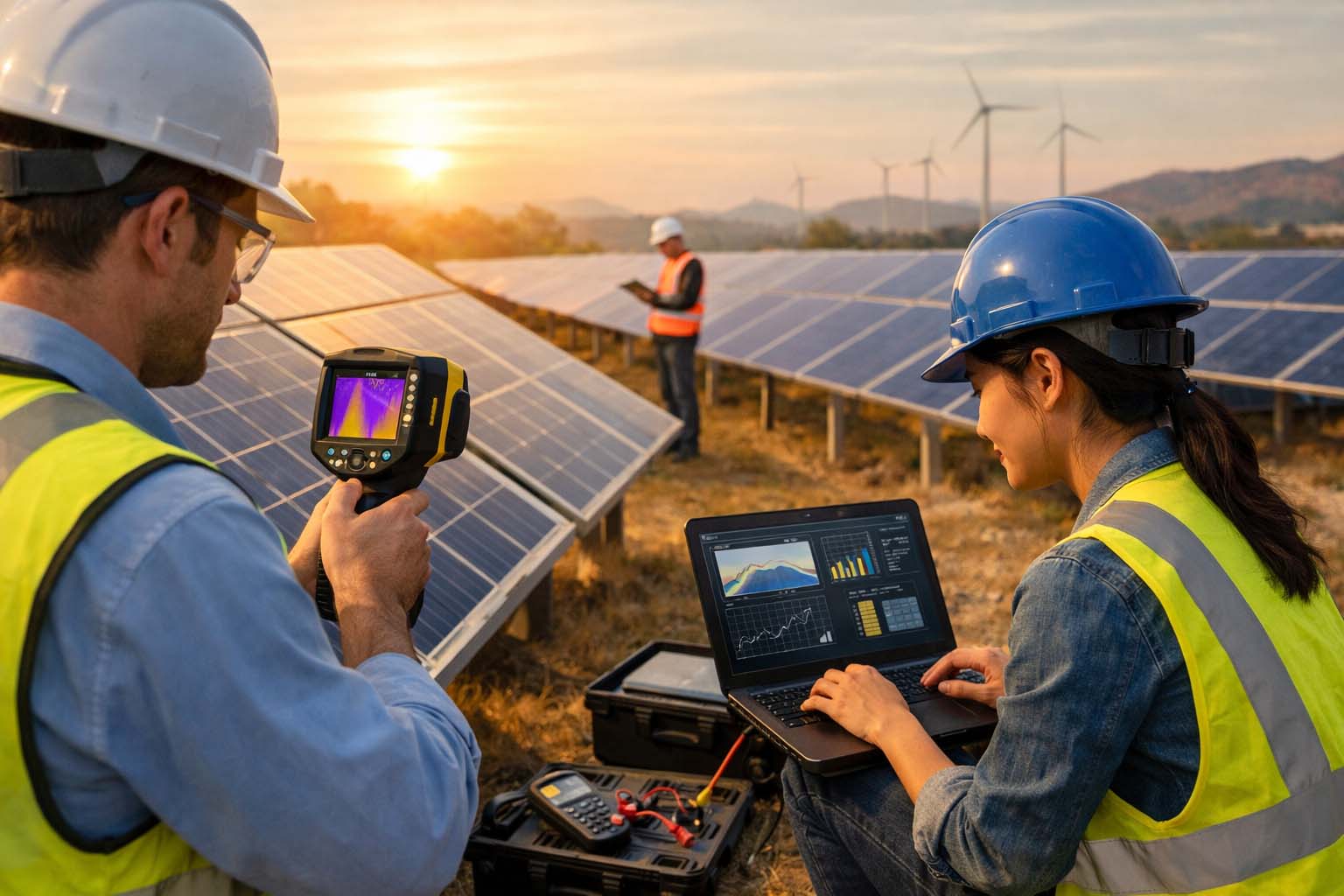
A solar energy system is an investment for the long term, and its performance in the field, apart from being dependent on the installation process, has been highly influenced by quality beginning with its manufacture.
It has been found that the solar panel quality check, the reliability testing of solar panels, and strict abidance by international standards such as those of IEC for solar panels have become the key to making available reliable solar performance every day.
This article has uncovered how to do the solar panel reliability testing for residential, commercial, or utility-scale to make available clean power.
Why Solar Quality Matters
Solar power systems are designed to function for a minimum of 25 to 30 years. However, it is also a fact that all solar power systems are not of equal quality. There may be differences in materials, manufacturing, and even testing quality.
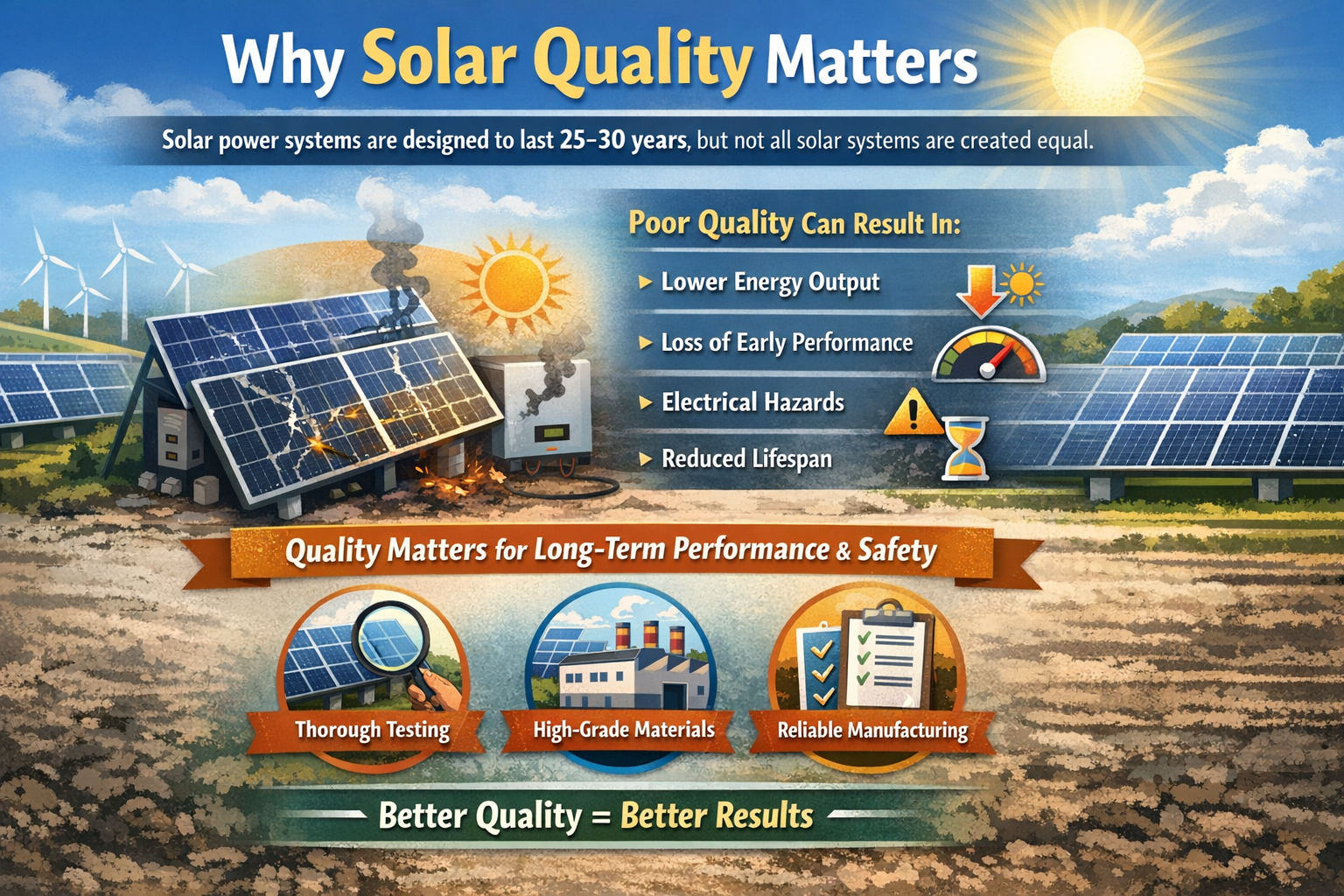
The entire quality check of solar power systems ensures that solar systems function as required in a safe manner.
This can result in:
Poor quality can result
A decrease in the actual energy produced relative to the rated capacity
Loss of Early Performance Potential
Electrical Hazards
Reduced lifespan
The performance of the whole field of a solar power system is immediately related to how seriously quality was taken in the testing and manufacturing process.
Understanding the Core of Solar Testing
It’s not sequential quality testing, says Gaster. It’s a process of complex steps that test everything from ruggedness to electrical functionality.
In fact, so much testing is involved in
Visible & Structural Inspection
Prior to their major testing, a fundamental solar panel quality check. The solar panels are assessed for:
Cracks, chips, or surface imperfections
Inconsistent cell alignment
Poorly sealed frames
The presence of wiring/junction box irregularities
Visible defects can provide warnings about other problems that may affect the production of energy.
Performance Evaluation under Standard Conditions
To verify if a PV panel is within the rated power, the test process under Standard Test Conditions, or STC, is used, which is a standard test environment conducted under 25°C and a light intensity of 1000 W/m². The test can result in voltage, current, or power production readings.
IEC Standards and Solar Cells
IEC standards and solar cells can be considered
Among the most significant benchmarks for an industrial-grade solar module will be the availability of the IEC standard for the solar panel, specifically:
IEC 61215: Performance & Reliability
IEC 61730: Safety
The panels, which conform to these specifications, have been submitted to rigorous testing for environmental and electrical stresses, simulating many decades of use.
IEC 61215: Performance & Durability
IEC 61215 involves a number of tests that subject solar photovoltaic panels to the following:
A number of tests which
Temperature cycling from high temperatures to cold temperatures
Damp-heat exposure (simulated humidity exposure)
HAIL IMPACT AND MECHANICAL LOAD TESTS
Hot Spot and Electrical Performance Stress
These tests identify problems that would not be discovered until many years of field experience. Panels meeting these certifications give greater assurance about future energy and longevity.
IEC 61730: Safety Under All Conditions
IEC 61730 has the primary focus on safety, which aims to ensure the panels’ safe use when under high voltage and the compliance of the electrical insulation and protection systems with international standards.
Safety certifications are also of equal importance to reliability since they protect people and equipment from potential risks for the lifetime of the panels.
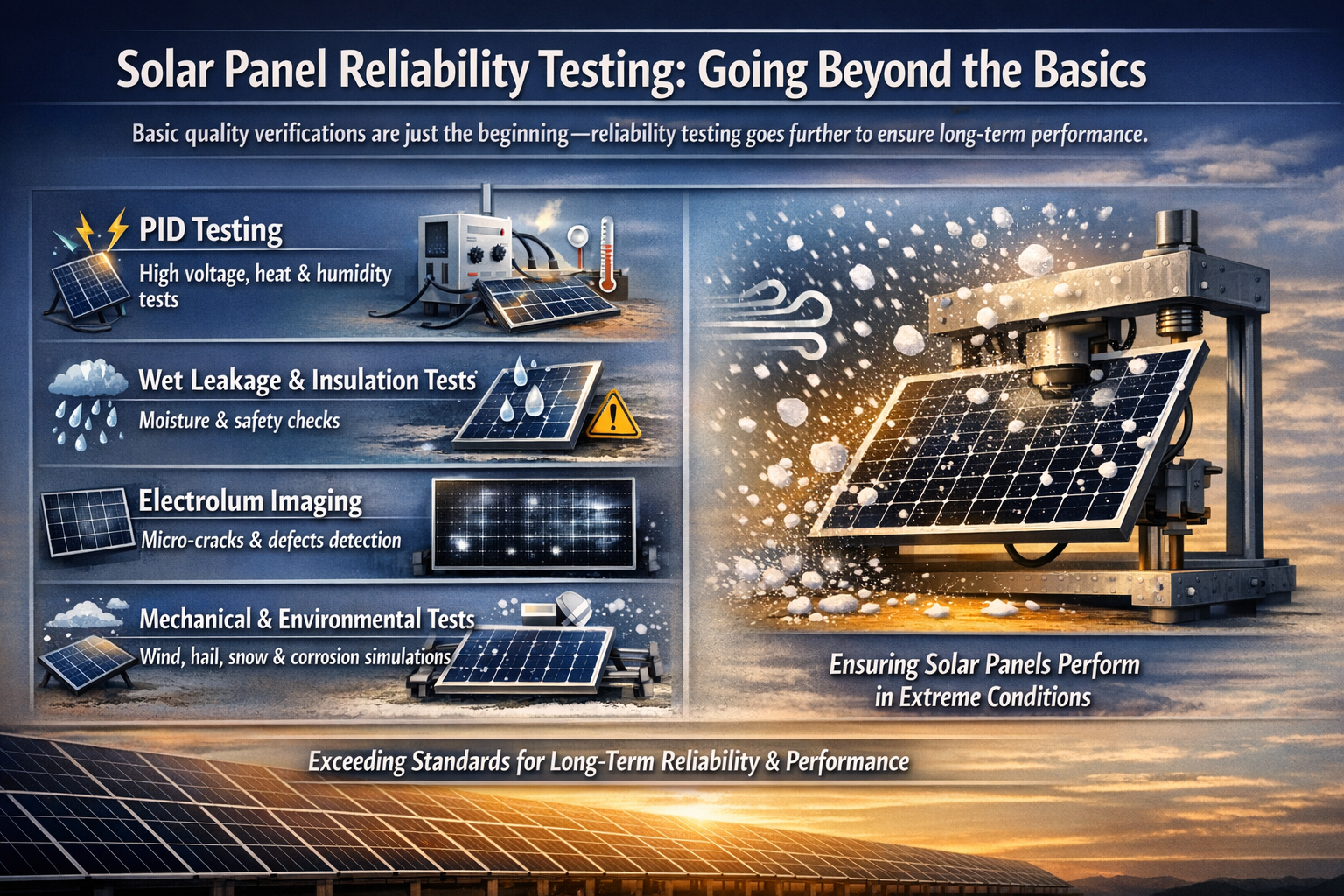
Solar Panel Reliability Testing: Going Beyond the Basics
Although basic quality verifications and IEC conformance are good starting points, reliability verification offers another level of assurance with regard to performance issues in particular climates and conditions.
 What Reliability Testing Includes
Reliability testing usually comprises of the following:
PID (Potential-Induced Deg) Testing
Panels are subjected to electric voltage in the conditions of humidity and temperatures to test for the deterioration of performance.
Wet leakage and insulation tests
These are to ensure that moisture does not affect electrical safety.
Electrolum
More advanced imaging reveals micro-cracks and flaws that are not visible to the naked eye.
Mechanical and environmental tests
These imitate wind, snow load, and hail effects, as well as corrosion-proof conditions, ensuring that solar panels work in harsh environments.
Such tests of dependability enable producers, including Emmvee, to exceed the bare minimum and produce goods that can resist even the toughest conditions and retain their performance capacity even after several decades.
How to Check Quality of Solar Panel Before Installation
In regard to installers, owners, or buyers, understanding how to do the solar panel quality check before their installation can play a significant role in the desired results.
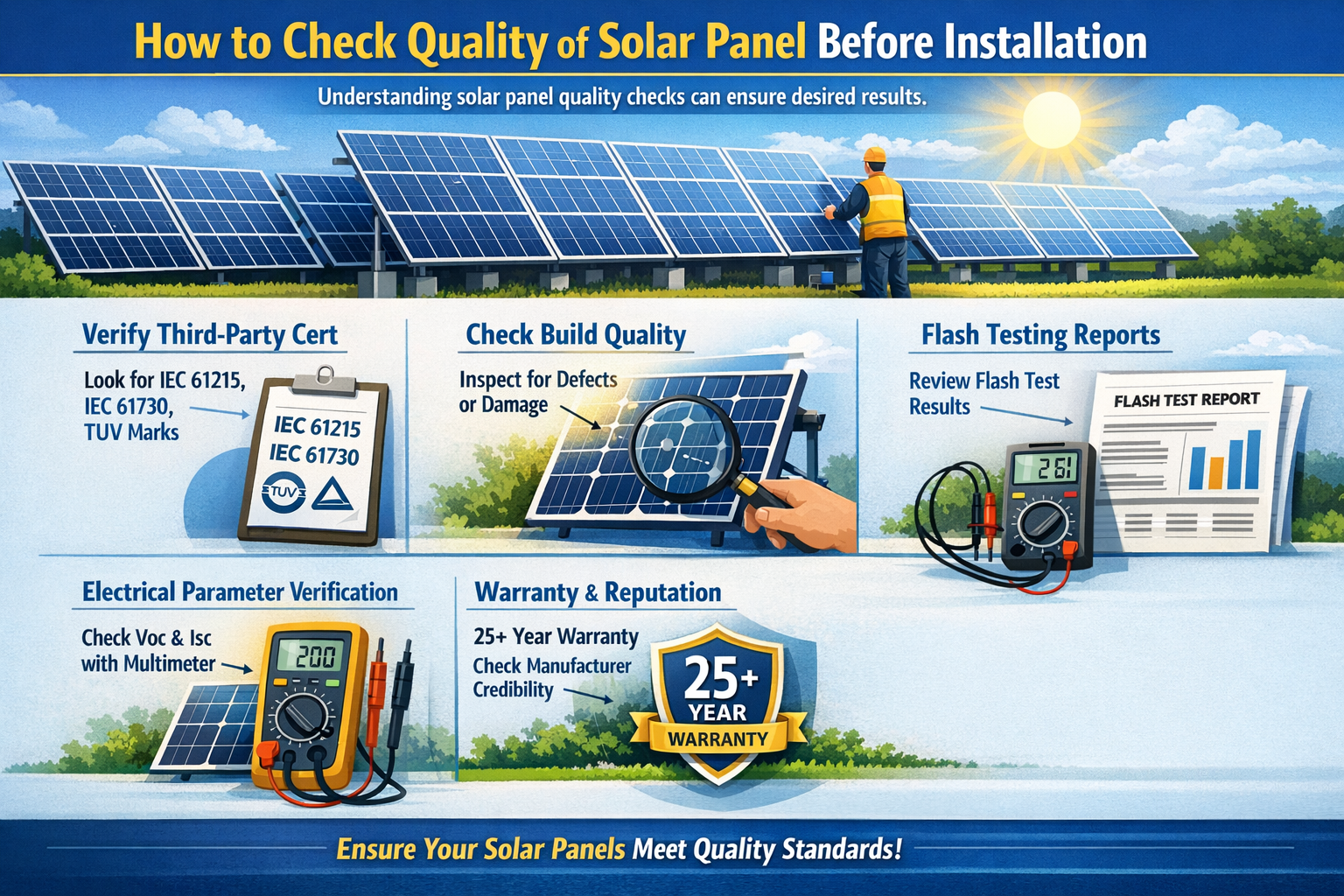
Here are some quality checks you can carry out or ask others to carry out:
Verify Third-Party Cert
Look for certification marks such as IEC 61215, IEC 61730, TUV, or others in the data sheet or label of your solar panel. These certifications verify that solar panels passed global certification tests.
Check Build Quality
The actual performance of a cell can be gauged by checking for any distortions in the cell structure of the panel. Structural consistency also relates to efficient performance.
Electrical Parameter Verification
Using a multimeter/solar tester, it is necessary to calculate the open-circuit voltage (Voc) and short-circuit current (Isc) under sunlight conditions.
These values will need to be compared to the ratings. If the values obtained are lower compared to the ratings, it could mean that it’s a quality issue.
Flash Testing Reports
Legitimate panel manufacturers or suppliers should be able to give you the flash test results of each panel so you know how well it performed.
Warranty and Manufacturer Reputation
An effective warranty should preferably be 25 years, which indicates how confident the manufacturer is in the performance of the panel.
Companies such as Emmvee provide complete warranties for their products because they strictly follow quality and reliability parameters.
The Impact on Field Performance
If quality testing procedures are strict and uniform, their results would immediately be reflected in the form of:
Higher Energy Yield
Those panels that have successfully been tested in terms of quality and reliability perform well in retaining their output over the years; this signifies greater energy production.
Less Degradation
Certified panels usually undergo less aging with the passage of years and hence retain a higher value of their rated power.
Enhanced Safety and Reliability
Quality testing also ensures that these systems are not only efficient but also that they are safe to operate, with minimal risks associated with electrical malfunctioning.
Predictable Long-Term Performance
Those that meet global norms and high reliability verification provide predictable and documented performance, important for funding and system integration.
To Wrap Up
The need to perform quality testing in today’s competitive photovoltaic industry to ensure that the products perform as they are supposed to, right from manufacturing through to installation, has been underlined.
Beginning from the compliance of solar panels to the requirements of IEC to understanding the process of solar panel quality check prior to the installation of the system, each and every process has its own significance in the efficient functioning of the system.
Whether it's the installers or the buyers, giving priority to quality tests can prove helpful for them.
Emmvee, focusing on quality, is a great example of how effective testing and certification ensure superior performance of solar installations.
By adopting effective quality control processes, you ensure sustainable power from solar installations for long periods of time.