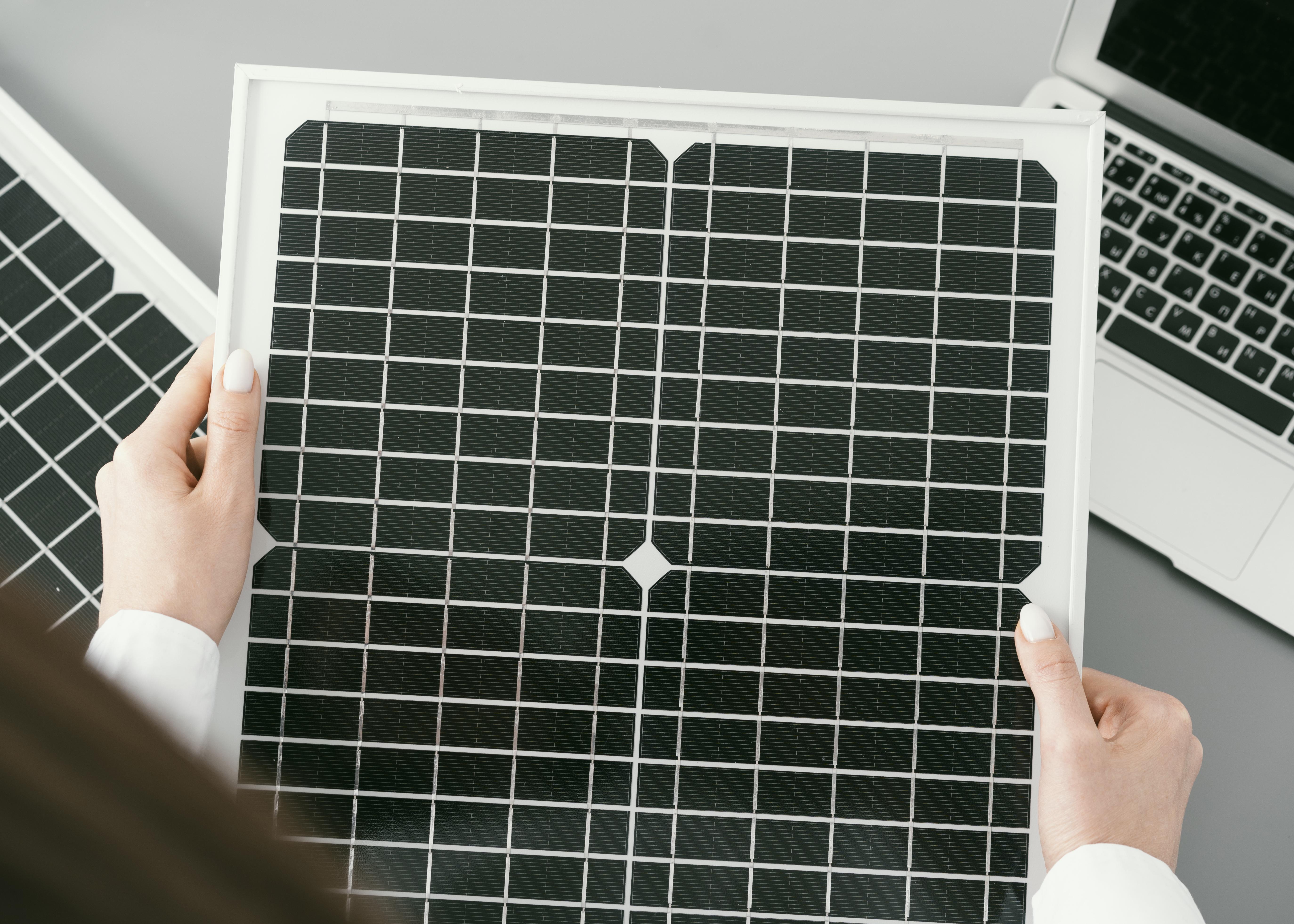
One of the most promising technologies for clean and renewable energy generation in the current energy field is photovoltaic (PV) cells. A photovoltaic cell is a semiconductor that generates electricity directly from sunlight using the photovoltaic effect.
They have been widely embraced due to their ability to generate electricity on-site, decrease dependence on fossil fuels, and have minimal operational intervention compared to conventional sources of power.
we are of the opinion that understanding both solar panel advantages and disadvantages is critical for home buyers, businesses, and industries looking to go green with a cleaner energy future.
Let us learn in detail about the advantages and disadvantages of photovoltaic cell as well as the disadvantages, how they function, and what the most important considerations are before making an investment.
Advantages of Photovoltaic Cells
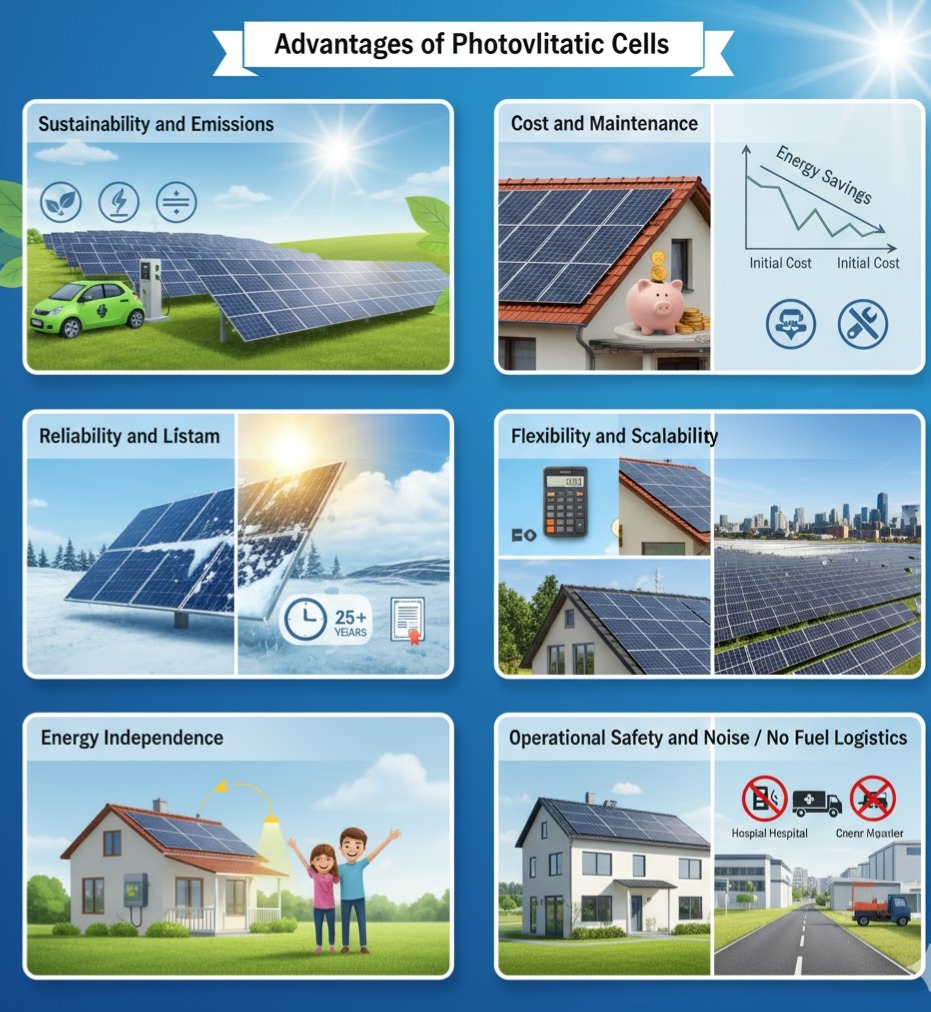
Sustainability and Emissions
Perhaps one of the most significant benefits of photovoltaic cell technology is its eco-friendliness. PV systems produce renewable electricity with no burning of fossil fuels, hence with no on-site greenhouse gas emissions when operating.
This positions them as an important tool in fighting climate change and air pollution. When well installed, solar systems result in cleaner air, a clean environment, and sustainability in the long term.
Cost and Maintenance
Solar panels may cost a fortune to purchase, but they are worth every penny in the long run. After installation, they have very little operational and maintenance cost. Unlike traditional generators, no fuel, lubricants, or spare parts need to be bought regularly.
The savings from energy over time typically pay for the initial cost, making PV systems cost-effective in the long term. With policies, incentives, and net metering available in most parts of the world, the economics also look all the better.
Reliability and Lifespan
Another significant advantage is the high reliability of solar systems. PV modules are engineered to maintain their performance in all types of weather, ranging from extreme heat to extreme cold.
The majority of manufacturers include 20-25-year warranties, but panels tend to be able to keep generating electricity for many years after the warranty expires, losing very little efficiency. This long-lasting performance provides stable energy generation and predictable performance over decades.
Flexibility and Scalability
When deployment is considered, solar photovoltaic cells' advantages and disadvantages are greatly affected by how flexible they are. PV cells are mounted virtually anywhere—on roofs, fields, or even embedded in cars and mobile systems.
Being scalable, they are best for use from powering a calculator to powering giant solar power plants that energize cities. We at Emmvee provide solutions that are specific for both residential and industrial development, catering to optimal utilization of space and efficiency.
Energy Independence
By producing electricity locally, solar systems minimize grid dependence and increase energy independence. This is particularly relevant in regions with poor electricity supply or frequent disruptions.
Coupled with battery storage, PV systems offer round-the-clock energy accessibility. For residential and commercial users, this means more control, stability, and autonomy.
Operational Safety and Noise
In contrast to fuel-based power generation systems, PV systems do not involve combustion and hence are inherently safer. They also do not contain moving parts, thus yielding very low noise levels.
As such, they are suitable for residential locations, hospitals, schools, and other noise-sensitive applications.
No Fuel Logistics
Yet another frequently overlooked benefit of photovoltaic cell technology is that it utterly avoids the requirement for fuel purchasing, transportation, and storage. Not only does this minimize operational inconvenience but also eliminates hazards associated with dealing with flammable fuels.
Disadvantages of Photovoltaic Cells
Although the advantages are tremendous, it's also imperative to note the disadvantages of photovoltaic cell technology so that a proper judgment can be made.
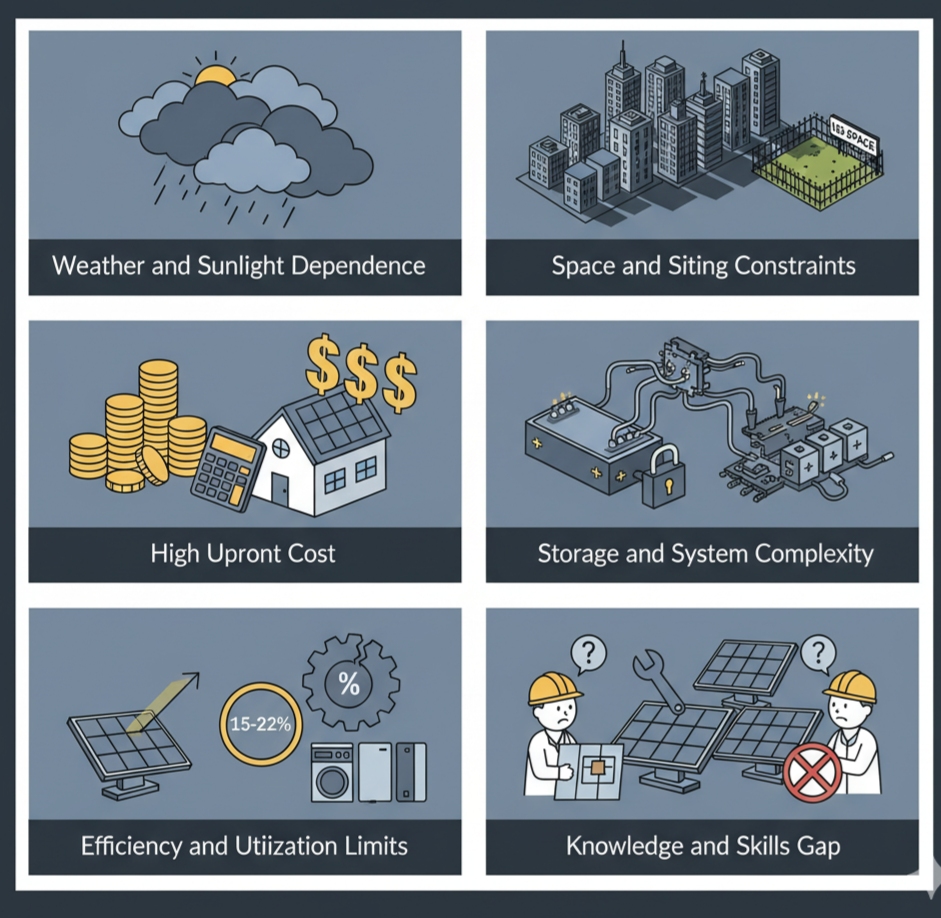
Weather and Sunlight Dependence
The most clear-cut limitation is that PV systems depend on sunlight. Energy production may fluctuate because of cloudy days, seasonal variations, or shading by surrounding buildings and trees. This renders them less efficient in areas with low solar irradiance or little sunlight all year round.
High Upfront Cost
Even with declining prices in recent years, solar panels continue to demand a substantial initial investment in modules, inverters, mounting systems, and electrical connections. While the expense is recouped in the long term, the high initial cost can discourage certain businesses and individuals.
Space and Siting Constraints
PV installations require an appropriate amount of unobstructed, structurally capable space. In homes with constricted roof areas or structures in densely populated cities, sufficient installation space can be difficult to identify. Ground-mounted systems need bigger pieces of land, which are not always possible.
Storage and System Complexity
Whereas solar performs satisfactorily during the daytime, its functionality at night time hinges on energy storage options such as batteries. The addition of storage adds both cost and system footprint. Additionally, sophisticated control systems are required for optimal energy utilization and meeting the standards of the grid, adding system complexity.
Efficiency and Utilization Limits
Even in ideal conditions, solar panels' conversion efficiencies are 15–22% for typical commercially offered modules. Thus, only a small portion of sunlight is utilized to produce electricity. Further, occasionally the system's cost-effectiveness can be hindered by mismatched appliances or grid conditions.
Knowledge and Skills Gap
In developing markets, there can be a lack of trained personnel who can familiarize themselves with the operation of photovoltaic cells and design and maintain the systems in the most efficient manner. This shortage can at times stunt adoption or result in badly designed installations.
Practical Considerations Prior to Installation
Knowing the advantages and disadvantages of solar panels is only the beginning. Practical assessments need to be made prior to investing in a PV system.
Site Assessment
Complete site evaluation is necessary to ascertain if your site is appropriate for solar installation. Solar irradiance, shading, and roof or ground space available, as well as structural suitability, have to be evaluated.
At Emmvee, our technical teams perform extensive site surveys so that your system provides the maximum efficiency.
Economic Evaluation
An economic analysis of feasibility is equally crucial. This entails comparing initial installation costs, anticipated energy savings, government incentives available, and possible storage requirements.
By matching these factors, you can calculate the payback period and overall financial return on investment of having a PV system installed.
To wrap up
Photovoltaic technology is the backbone of the world's shift towards renewable energy. By considering the advantages and disadvantages of solar photovoltaic cells', businesses and individuals can make more intelligent decisions that consider cost, performance, and sustainability.
The benefits of photovoltaic cell systems, such as sustainability, reliability, and energy independence, unequivocally outweigh the drawbacks when installations are properly planned and site-specific.
At Emmvee, our expertise lies in conceptualizing and providing solar solutions that offer the maximum benefits and mitigate the challenges.
Whether you're considering rooftop solar for your home or undertaking a large-scale project, our experience guarantees a hassle-free and efficient path to energy independence.
Using solar power today is an investment in a cleaner, safer tomorrow.